



Last Updated: August 2026
An odometer rollback is a vehicle's recorded mileage altered downward to make the car look less used than it is. CARFAX estimated in December 2025 that 2.45 million cars on US roads carry one, 14% more than the year before. The fraud works because mileage drives price. It survives because the dashboard number is the figure buyers never think to question, and because it can now be changed without opening the dash.
AR Motorsports has sold used cars from an indoor showroom in Bay Shore since October 2018. Its inventory starts under $10,000 and runs up from there.
That price band is why this article exists. Rollbacks concentrate in older, cheaper cars, and New York's disclosure rules thin out there too.
Key Takeaways
- The scale is large and growing: CARFAX put rollbacks at 2.45 million vehicles in December 2025, up 14% on the year before.
- Look for mismatch, not for wear: A high-mileage car should look worn. The warning sign is heavy wear on a car claiming low miles.
- The paper trail decides it: A service record showing more miles than the dashboard is direct evidence.
- Digital odometers are not safer: Mileage held in electronics can be reprogrammed, leaving no mechanical trace.
- New York stops requiring disclosure at model year 2010: Older cars carry no mileage statement, so the burden shifts to you.
Each point changes what you check, and in what order.
What Is an Odometer Rollback?
An odometer rollback is any alteration of a vehicle's recorded mileage meant to misrepresent how far it has traveled. Older cars had mechanical counters that could be wound back by hand. Modern cars store the figure electronically, where the right equipment can rewrite it.
The scale is not marginal. According to CARFAX (December 2025), an estimated 2.45 million cars on the road likely have rolled-back odometers, 14% more than the previous year. Each lost an average of around $3,300 in value.
That $3,300 is only the paperwork loss. Parts wear on real miles rather than displayed ones, so a transmission service that looks distant may already be overdue.
What Are the Physical Signs of a Rollback?
The signal is a mismatch between condition and the number on the dash. That distinction matters more than most guides admit. A ten year old car at 140,000 miles should have a worn seat and a shiny gear lever. None of that is odd.
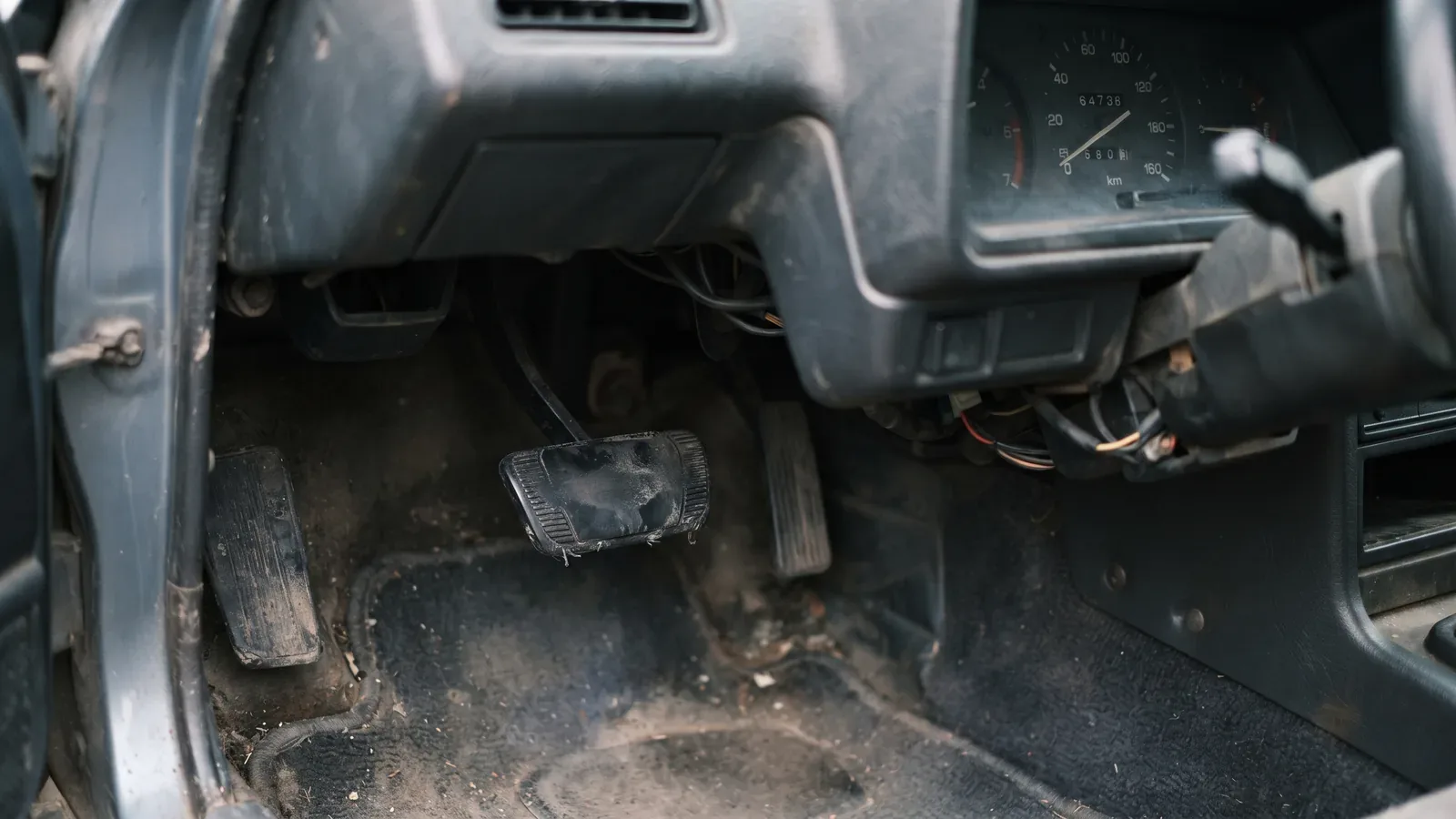
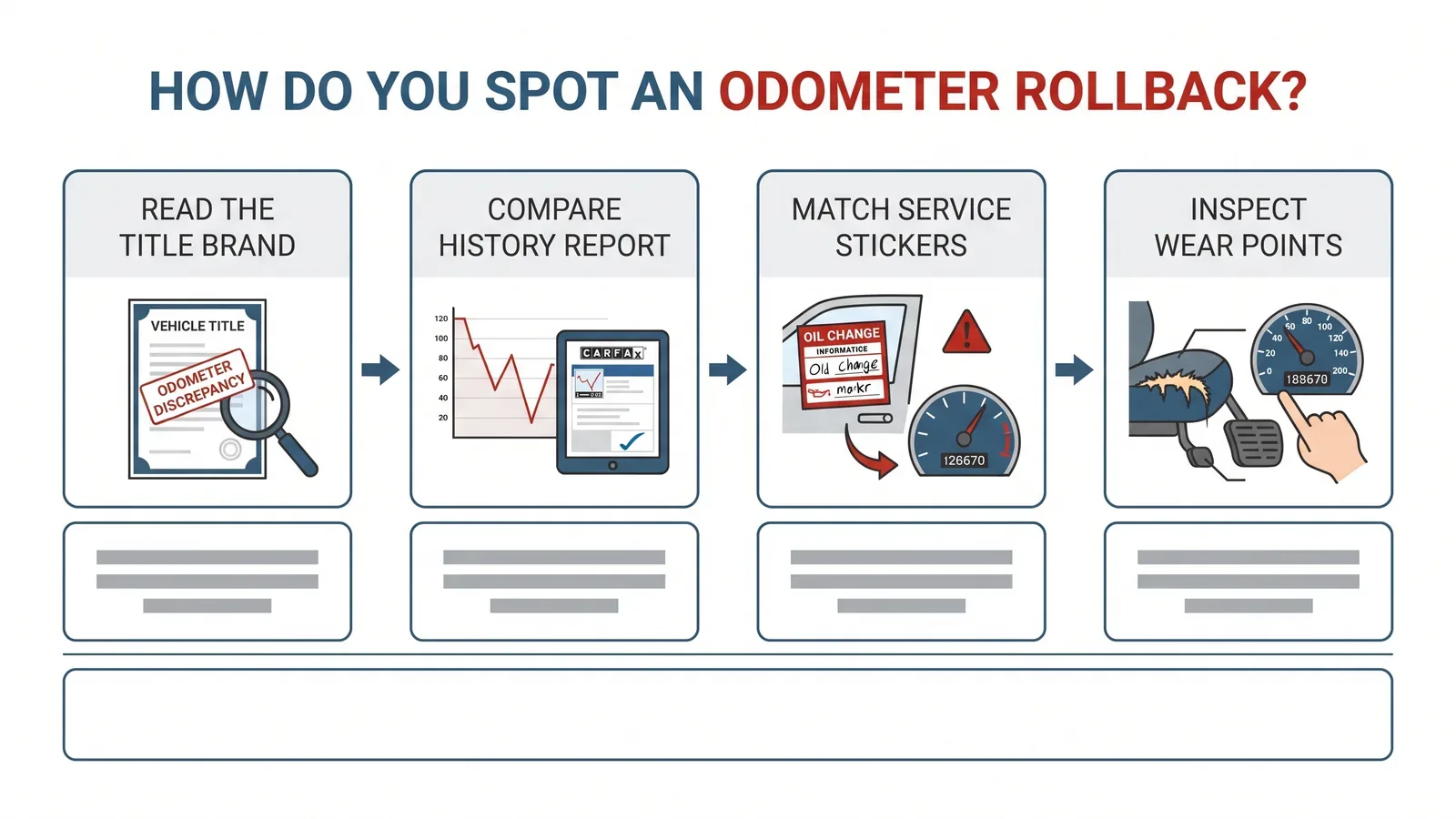
What is suspicious is that same wear on a car claiming 60,000 miles. Check the pedals for rubber rubbed smooth, then the seat bolster, steering wheel rim and door armrest. Those age on use rather than on time. Finish at the instrument cluster: scratches, loose trim or misaligned digits suggest it was opened.
How Does a Vehicle History Report Expose Mileage Fraud?
A history report works by building a timeline. It collects mileage recorded at registrations, inspections and repair visits, in date order. Fraud shows up as a number that falls when it should rise.
New York helps here, because the state requires an annual safety inspection. That gives most registered cars a dated mileage reading every year. A gap in those readings, or one lower than an earlier reading, needs an explanation.
Every vehicle at AR Motorsports includes a free CARFAX report, and each listing shows the owner count. Reading that timeline before price is what protects a budget buyer. Compare the mileage on the Suffolk County inventory and the under $5,000 listings against the dashboard.
What Do the Title and Service Records Show?
Start with the title, because it can carry a permanent warning. A brand reading Not Actual Mileage or Exceeds Mechanical Limits means the reading is already known to be unreliable. Those brands follow the car.
Then look for the paperwork sellers forget. Oil change stickers, glovebox receipts and inspection slips carry a dated mileage. Any one above the current reading settles it.
Here is where New York surprises people. According to the New York DMV (2026), the title's odometer disclosure is required only for model year 2011 and later vehicles. Those must also be 20 model years old or newer. For anything built in or before model year 2010, disclosure is not required.
Read that against a budget search. Many cars under $5,000 on Long Island are model year 2010 or older, so no mileage statement is required.
| Document | What it can reveal | Where it falls short |
|---|---|---|
| Vehicle title | A Not Actual Mileage or Exceeds Mechanical Limits brand | Not required on model year 2010 and older |
| Vehicle history report | Dated mileage timeline from inspections and service | Only shows mileage someone reported |
| Annual NY inspection slips | A yearly mileage stamp on most registered cars | Gaps if unregistered or out of state |
| Stickers and receipts | Mileage recorded by whoever did the work | Easily removed before a sale |
| Physical wear | Wear that outruns the displayed mileage | A judgment call, and normal on old cars |
No single row settles it. Two rows disagreeing tells you to walk away.
Can a Digital Odometer Be Altered?
Yes, and treating a digital display as tamper-proof is a common mistake. The mileage lives in the vehicle's electronic modules, and tools sold for instrument repair can rewrite it. Nothing is unscrewed, so the clues above may be absent.
There is a small consolation. Modern cars often store mileage in more than one module, so a careless job leaves those figures disagreeing, and a scan can surface it. AR Motorsports inspects the vehicles in its own inventory. Buyers shopping elsewhere should arrange an independent inspection.
Where Can You Check a Car's Mileage History?
The federal option is the one buyers rarely hear about. The National Motor Vehicle Title Information System is run by the US Department of Justice. According to NMVTIS (2026), a report includes the latest reported odometer readings, the current title and its brand history. It also flags salvage determinations.
One detail is worth knowing before you shop. NMVTIS states that consumers cannot obtain its reports from CARFAX or Experian, which supply that data to dealerships only. Buyers use a separate list of approved providers. That is an argument for buying where the report comes included.
What Are Your Rights After an Odometer Rollback in New York?
State and federal law both apply, and the federal remedy carries more weight. Under 49 U.S.C. 32710, violating the odometer chapter with intent to defraud brings liability for three times actual damages, or $10,000, whichever is greater. That is a civil claim you bring yourself.
New York adds a criminal layer. Under New York General Business Law 392-e, giving a buyer a false mileage statement is a misdemeanor. So is altering a mileage device to show fewer miles.
Buying from a registered dealer also brings warranty coverage a private sale does not. According to the New York Attorney General (2026), the Used Car Lemon Law sets mandatory coverage by mileage band. It runs from 90 days or 4,000 miles down to 30 days or 1,000 miles.
Frequently Asked Questions
Can you tell if an odometer has been rolled back?
Often, yes, but not by looking at the dashboard. The reliable test compares the displayed mileage against dated records: inspection slips, service receipts and the history timeline. A figure that falls over time is direct evidence. So is any service record showing more miles than the car currently reads. Physical wear supports the case but rarely proves it, because old cars are supposed to look used.
How do you identify odometer tampering on the car itself?
Look for wear that outruns the miles. Smooth pedal rubber, a collapsed seat bolster and a polished steering wheel on a car claiming low mileage are the classic combination. Then inspect the instrument cluster for scratches, loose trim or digits that do not line up. On a digital dashboard, flickering warning lights can indicate work on the wiring. None of these is conclusive alone.
Can CARFAX detect an odometer rollback?
It can flag one when the underlying records disagree. CARFAX collects mileage from registrations, inspections and repair shops, so a reading that drops between two dated entries becomes visible. What no report can see is mileage nobody ever recorded. A car serviced only by its owner leaves long stretches of the timeline blank. That is why a clean report is reassuring rather than conclusive.
Is odometer rollback a felony in New York?
Not under the state's odometer statute. New York General Business Law 392-e makes a false mileage statement to a buyer a misdemeanor. It treats altering a mileage device the same way. The heavier consequence is usually federal and civil. Under 49 U.S.C. 32710, a buyer defrauded on mileage can seek three times actual damages, or $10,000, whichever is greater. That remedy requires showing intent to defraud.
Does a New York seller have to tell me the mileage?
Only on newer cars. The DMV requires the odometer disclosure on the back of the title for model year 2011 and later vehicles. Those must also be 20 model years old or newer. Vehicles from model year 2010 and earlier carry no mileage disclosure requirement. Damage disclosure is still required at every age, so the two are easy to confuse. On an older budget car, verifying mileage falls to you.
How do I check a car's mileage for free?
Start with the annual New York inspection history, which gives most registered cars a dated mileage stamp each year. Then consider the federal NMVTIS system, run by the Department of Justice. Its reports include the latest reported odometer readings alongside title brands and salvage records. Consumers cannot obtain NMVTIS reports through CARFAX or Experian, which supply that data to dealerships only. Approved consumer providers are listed on the NMVTIS site.
Why do rollbacks happen more on cheap cars?
Because the return is high and the scrutiny is thin. Knocking 50,000 miles off a $4,000 car moves its asking price by a meaningful share of the total. The work costs the seller very little. Buyers at that level are often replacing a car that has already failed, under time pressure, with nothing left for an independent inspection. Older cars also carry fewer disclosure requirements.
Can a mechanic find evidence of a rollback?
Sometimes, and it is worth asking. Many modern vehicles store mileage in more than one electronic module, and a careless alteration leaves those figures disagreeing. A diagnostic scan can surface that. A technician can also judge whether engine, brake and suspension wear matches the miles on display. Neither check will catch every careful job, so treat an inspection as one input alongside the documented history.
What does a Not Actual Mileage title brand mean?
It is a permanent notice on the title that the recorded mileage cannot be relied on. It usually follows an odometer problem found earlier in the car's life, whether tampering or a failed instrument cluster. The brand stays with the vehicle through every later sale, so it cannot be hidden from you. It also depresses resale value sharply, so expect the same discount when you sell.
What should I do if I bought a car with a rolled-back odometer?
Collect the paperwork first: the listing, the bill of sale, the title, any messages and the history report. Those documents are what a claim rests on, and they get harder to assemble over time. Then have the true mileage documented in writing by a repair shop. A federal claim under 49 U.S.C. 32710 needs evidence of intent to defraud, so the seller's statements matter. Reporting it to the New York Attorney General is also worth doing.
Executive Summary
Odometer rollback remains a live risk at the budget end of the market. CARFAX estimated 2.45 million affected vehicles in December 2025, up 14% year over year, at an average loss near $3,300. Spotting one means finding mismatches rather than damage, because genuine high-mileage cars are supposed to look worn. The dated paper trail does the real work: title brands, annual New York inspection readings and history timelines. Digital odometers offer no protection, since the figure can be rewritten electronically. New York requires disclosure only on model year 2011 and later vehicles, leaving the oldest cars uncovered.
What Should You Do Next?
First, ask for the vehicle history report before you discuss price, and read the mileage timeline in date order. Second, check the title for a Not Actual Mileage brand, and remember that a 2010 or older car carries no required mileage statement. Third, compare any dated mileage on receipts against the dashboard.
AR Motorsports includes a free CARFAX report with every vehicle and has held a BBB A+ rating since August 2023. You can schedule a test drive and read the full mileage history on any car in stock.
People Also Read
About the Author
Angelo writes for the AR Motorsports team in Bay Shore, New York. The indoor showroom at AR Motorsports has served Suffolk and Nassau County since October 2018. Every vehicle comes with a free CARFAX report, so buyers read the history before they commit. AR Motorsports has held a BBB A+ rating since August 2023. The team works with buyers across every credit profile.
Expertise: Used Vehicle Sales, Vehicle History Reporting, Auto Financing, Trade-In and Vehicle Appraisal, Long Island Used Car Market
Connect: Facebook
Disclaimer: This article is for general information only and is not financial, legal, or tax advice. Vehicle availability, pricing, and terms change without notice. Financing is arranged through third-party lenders and is subject to credit approval, and not all applicants qualify. Vehicle history information comes from third-party reports, including CARFAX, and AR Motorsports does not guarantee that any report is complete. Confirm current details with AR Motorsports before making a purchase decision.