


Last Updated: July 2026
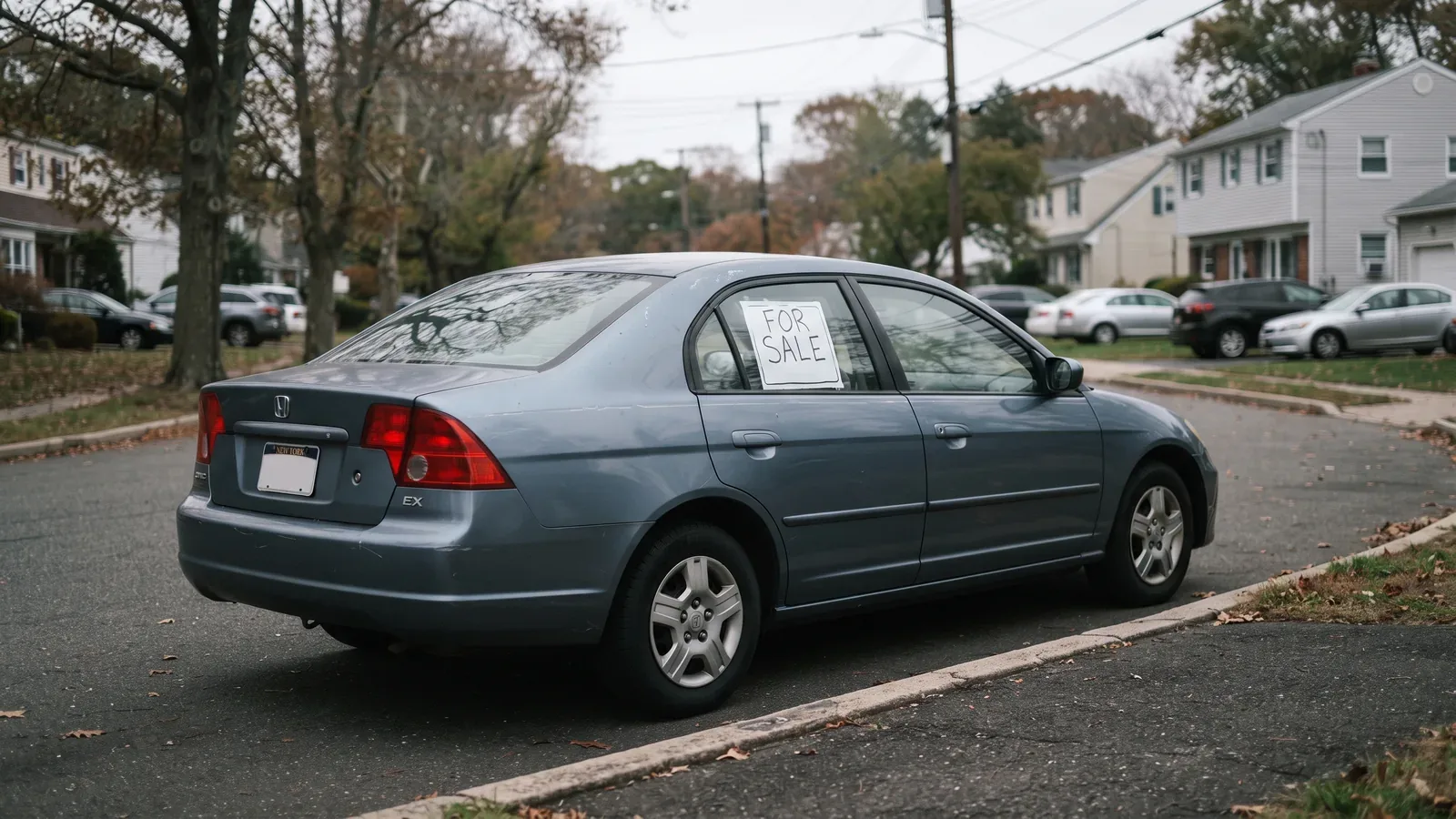
Curbstoning is the practice of selling vehicles for profit while pretending to be a private owner, without the dealer registration New York law requires. The name comes from the method: no lot, so the cars sit at the curb and the street becomes the showroom. Car curbing is the same thing under a more common name, and a curbstoner is sometimes called a curbsider.
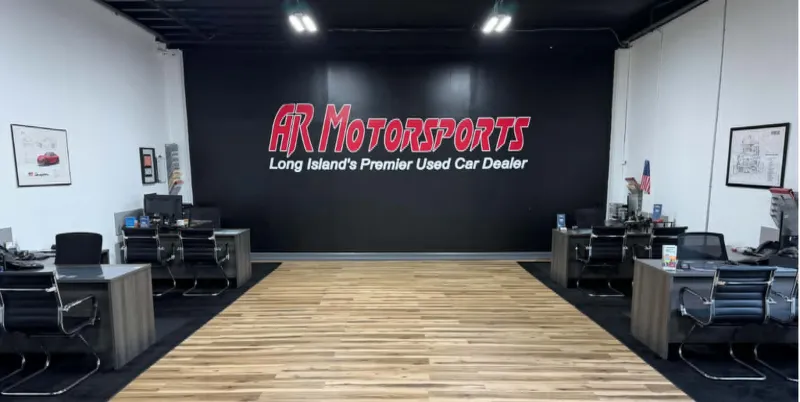
AR Motorsports has sold used cars from an indoor showroom in Bay Shore since October 2018, across Suffolk and Nassau County.
The reason this article exists is the price band. Curbstoned cars cluster around $3,000, which is the same money a first-time buyer or a commuter replacing a dead car has to spend.
Key Takeaways
- Curbstoning means unlicensed dealing: Selling cars for profit while posing as a private owner. New York requires used car dealers to register with the state.
- The scale is not small: A New York State Senate report estimates roughly 470,000 curbstoned vehicles are sold in the state each year.
- The average price is about $3,000: That is the budget end of the market, so budget buyers absorb most of the risk.
- Title jumping is the usual mechanic: The seller never puts the car in their own name, so nothing on paper connects them to it.
- Private sales carry no dealer protections: No Buyers Guide, no Lemon Law coverage, and nobody to hold responsible afterwards.
Each of those points changes what you should look for when a listing seems unusually cheap.
What Does Curbstoning Actually Mean?
Curbstoning is unlicensed dealing disguised as a private sale. According to a New York State Senate report (2015), unlicensed dealers pose as the car's owner and sell it on to an unwary buyer. They use public streets as both storage and showroom, because they have no lot.
The disguise is the point. New York registers used car dealers and regulates how they operate, which brings paperwork requirements, safety obligations and tax collection. A seller who registers nothing avoids all of it. Posing as a private owner also removes your recourse. The protections that attach to a dealer sale do not attach to a private one.
How Common Is Car Curbing in New York?
More common than most buyers assume. The same Senate report estimates approximately 470,000 curbstoned vehicles are sold in New York State annually. It puts the average price of one at about $3,000. For comparison, it cites an average used car price of $18,800 in the same period.
That price gap is the whole risk profile. Curbstoners are not competing for buyers looking at a $20,000 certified vehicle. They are competing for the person with $3,000 who needs a car this week. The report also cites expert estimates that 20 to 80 percent of online used car adverts come from curbstoners. That is a wide range, but serious at either end.
What Is Title Jumping and Why Does It Matter?
Title jumping is when a seller buys a vehicle, never signs the title into their own name, and then sells it on. The paperwork skips a link. On paper the car passes from its previous registered owner straight to you, and the person who actually sold it to you appears nowhere.
That is not a clerical shortcut. It is what makes a curbstoner untraceable. If the engine fails a fortnight later, the number they gave you stops working and the title gives you a stranger's name instead of theirs. It also hides how long they held the car and what they did to it, including any repair that was cosmetic rather than mechanical.
What Are the Warning Signs of a Curbstoner?
The signals are consistent enough to check in order. The strongest single indicator is a seller who wants to meet away from where they live. A parking lot or a station qualifies. A genuine private owner usually has no reason to avoid their own address.
Then listen for the story about ownership. Curbstoners routinely describe the car as belonging to a friend, a relative or a neighbor they are helping out. That can be true. It is far less likely to be true when combined with a public meeting point and a price well below the market.
| Signal | Private owner | Curbstoner |
|---|---|---|
| Meeting place | Their home or driveway | Car park, roadside, station |
| Name on the title | Matches the seller | Someone else entirely |
| How many cars | One, occasionally | Several listings, same phone |
| Phone number | Stays reachable after | Often unreachable afterwards |
| Paperwork offered | Title and service records | Title only, sometimes unsigned |
| Price | Around market | Noticeably below market |
Two or three of those together is enough to walk away. One on its own may be nothing.
Why Does Buying From a Registered Dealer Matter?
Because a registered dealer is subject to disclosure rules a private seller is not. According to 16 CFR Part 455 (1985), a dealer must display a Buyers Guide on every used vehicle offered for sale. It states whether a warranty applies or the car is sold as-is. A curbstoner posing as a private owner displays nothing.
New York adds more on top. According to the New York Attorney General (2026), the Used Car Lemon Law gives mandatory warranty coverage on dealer sales by mileage band. Cars from 18,001 to 36,000 miles get 90 days or 4,000 miles. Up to 79,999 miles it is 60 days or 3,000 miles. Up to 100,000 miles it is 30 days or 1,000 miles. None of that applies to a private sale.
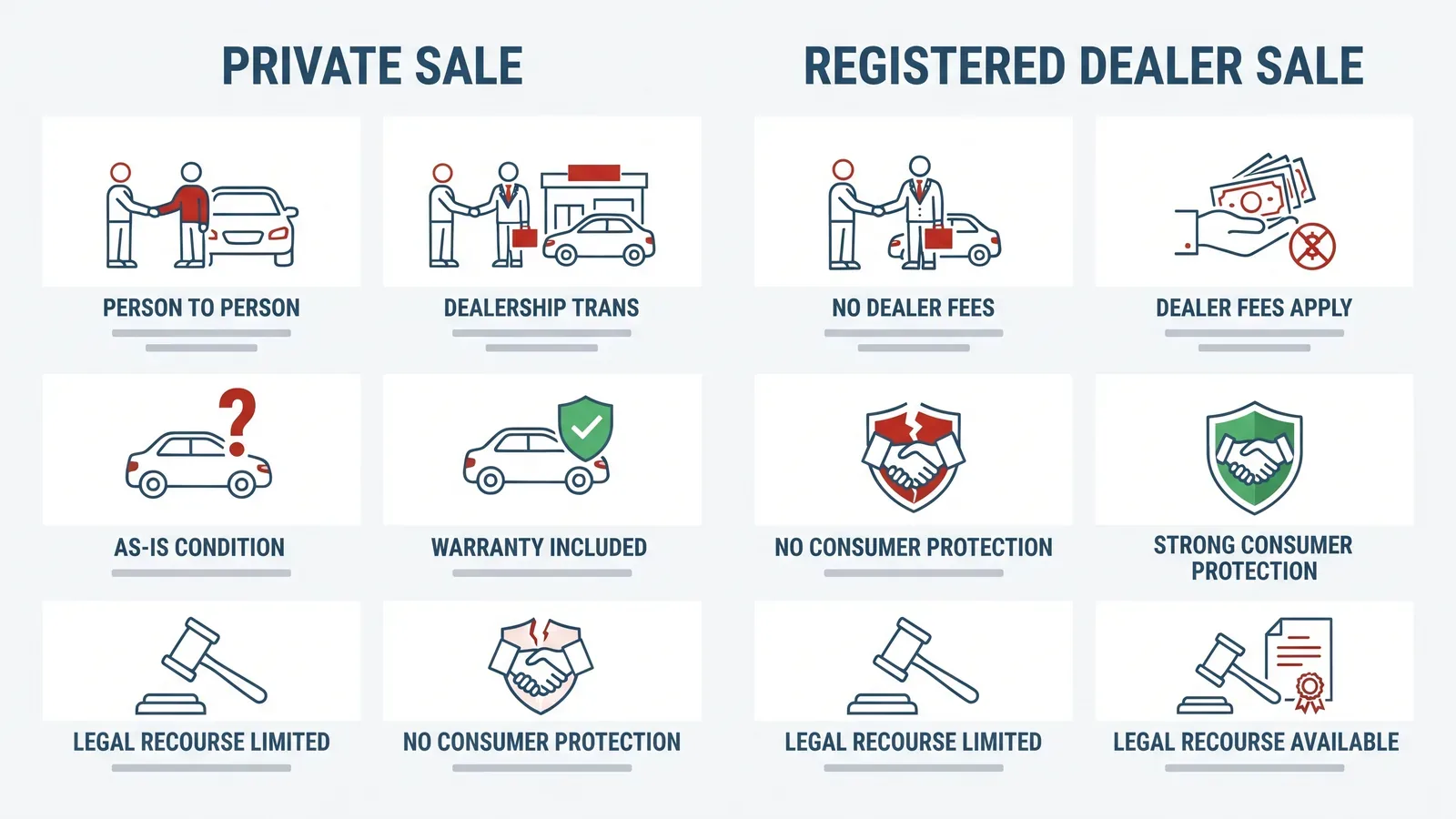
Before committing to any private listing, check the name on the title against the seller's identification. AR Motorsports publishes its Suffolk County inventory and its Nassau County listings under $5,000 with the owner count on each vehicle.
How Do You Check a Car Before You Buy It?
Start with the title, because that is where curbstoning shows up first. The name on it should match the identification of the person selling it to you. If it does not, ask why, and treat a vague answer as an answer.
Then read the vehicle history. A report will show the number of previous owners, any accident on record, and whether the odometer reading is consistent over time. Every AR Motorsports vehicle includes a free CARFAX report, which is the same document you should be asking any seller to produce. A private seller who will not show one is telling you something.
What Should You Do If You Bought a Curbstoned Car?
Gather the paperwork you have before doing anything else. The listing, any messages, the title, the bill of sale if one exists, and the phone number used. Those documents are what any complaint will rest on, and they are easier to collect now than in a month.
Then report it. New York treats unlicensed dealing as an offense. The Senate report notes a $1,000 fine for operating without a license. Reporting matters even when recovery looks unlikely, because curbstoners sell repeatedly. The report describes one individual who moved some 1,250 vehicles over a criminal career.
Frequently Asked Questions
Is curbstoning illegal in New York?
Yes. New York requires used car dealers to register with the state, so selling vehicles for profit without that registration is unlawful. The State Senate report notes a $1,000 fine for operating without a license. Legislation was later passed to raise penalties for roadside selling. Posing as a private owner to avoid registration is the offense, not the roadside parking itself.
What is the difference between curbing a car and curbstoning?
They describe the same practice. Curbstoning is the term used in legislation and industry reporting. Car curbing and curbing a car are the everyday versions of the same phrase. A person doing it may be called a curbstoner or a curbsider. If you see any of those words in a warning about used car sales, they refer to unlicensed dealing disguised as a private sale.
How can I tell if a seller is a licensed dealer?
A registered dealer operates from a business address, provides a bill of sale on business paperwork, and displays a Buyers Guide on the vehicle. Ask where the car is kept and whether you can see it there. Be wary of a seller who will only meet somewhere neutral. If their name is also not on the title, this is not a private sale.
Does a vehicle history report reveal curbstoning?
Sometimes, and it is worth pulling for other reasons anyway. A history report can show a very recent ownership change, or a mismatch between seller and last registered owner. It can also show an odometer reading that does not progress logically. It will not label anyone a curbstoner, but the pattern of a car bought and flipped within weeks is visible in the record.
Why do curbstoners target cheaper cars?
Because the buyer pool is largest and the scrutiny is lowest. The Senate report puts the average curbstoned vehicle near $3,000, against a general used car average of $18,800 in the same period. At that price a buyer is often replacing a car that has already failed, under real time pressure. The budget for an independent inspection is rarely there, and the seller knows it.
What paperwork should a private seller give me?
A properly signed title in their own name, a bill of sale, and ideally service records covering recent work. The title is the document that matters most, because it is the one a curbstoner cannot produce cleanly. If the name on it is not the name of the person handing it over, the sale is not what it appears to be. The explanation offered does not change that.
Are online classified adverts safe to buy from?
They can be, with checks. The Senate report cites expert estimates that 20 to 80 percent of online used car adverts come from curbstoners. That is a wide range, but the exposure is real at either end of it. Insist on meeting at the seller's own address and match the name on the title to their identification. Treat a listing priced well under comparable cars as a question, not a bargain.
Does the New York Used Car Lemon Law protect a private purchase?
No. The Used Car Lemon Law applies to vehicles sold by dealers, with coverage set by the car's mileage at sale. A private sale falls outside it entirely, which means no mandatory warranty on the engine, the transmission or any of the other covered components. That is one of the clearest practical differences between buying privately and buying from a registered dealership, and it is worth pricing in.
What happens if the title is not in the seller's name?
Walk away. That is title jumping, the defining mechanic of curbstoning. The seller never registered the car in their own name, so nothing on paper connects them to it. Beyond the legal problem, it leaves you nobody to hold responsible if the car fails a fortnight later. It can also create registration trouble in your own name. No price justifies taking on that paperwork.
Is a cheap car always a warning sign?
Not on its own. Genuine private sellers sometimes price low for a quick sale, and older high-mileage cars are legitimately inexpensive. The concern is a low price combined with other signals. Watch for a neutral meeting place, a title in another name, several cars listed from one phone number, or no history report. Two or three of those together is enough to walk. Price alone proves nothing.
Executive Summary
Curbstoning is unlicensed dealing disguised as a private sale. New York State Senate research puts it at roughly 470,000 vehicles a year, averaging about $3,000 each. That price band is the budget end of the market. The buyers most exposed have the least room to absorb a bad car. The usual mechanic is title jumping, where the seller never registers the vehicle in their own name and so leaves no trace. Private sales carry none of the dealer obligations: no Buyers Guide under federal rules and no Used Car Lemon Law coverage under state law. Check the title against the seller's identification, insist on meeting at their address, and read the vehicle history before money changes hands.
What Should You Do Next?
First, on any private listing, ask to meet at the seller's home and to see the title before you travel. Second, match the name on the title to their identification, and treat any mismatch as the end of the conversation. Third, pull a vehicle history report and check that ownership and odometer readings progress sensibly.
AR Motorsports includes a free CARFAX report with every vehicle and has held a BBB A+ rating since August 2023. You can schedule a test drive and read the history on any car before you discuss price.
People Also Read
About the Author
Angelo writes for the AR Motorsports team in Bay Shore, New York. The indoor showroom at AR Motorsports has served Suffolk and Nassau County since October 2018. Every vehicle comes with a free CARFAX report, so buyers read the history before they commit. AR Motorsports has held a BBB A+ rating since August 2023. The team works with buyers across every credit profile.
Expertise: Used Vehicle Sales, Vehicle History Reporting, Auto Financing, Trade-In and Vehicle Appraisal, Long Island Used Car Market
Connect: Facebook
Disclaimer: This article is for general information only and is not financial, legal, or tax advice. Vehicle availability, pricing, and terms change without notice. Financing is arranged through third-party lenders and is subject to credit approval, and not all applicants qualify. Vehicle history information comes from third-party reports, including CARFAX, and AR Motorsports does not guarantee that any report is complete. Confirm current details with AR Motorsports before making a purchase decision.