




Last Updated: November 2026
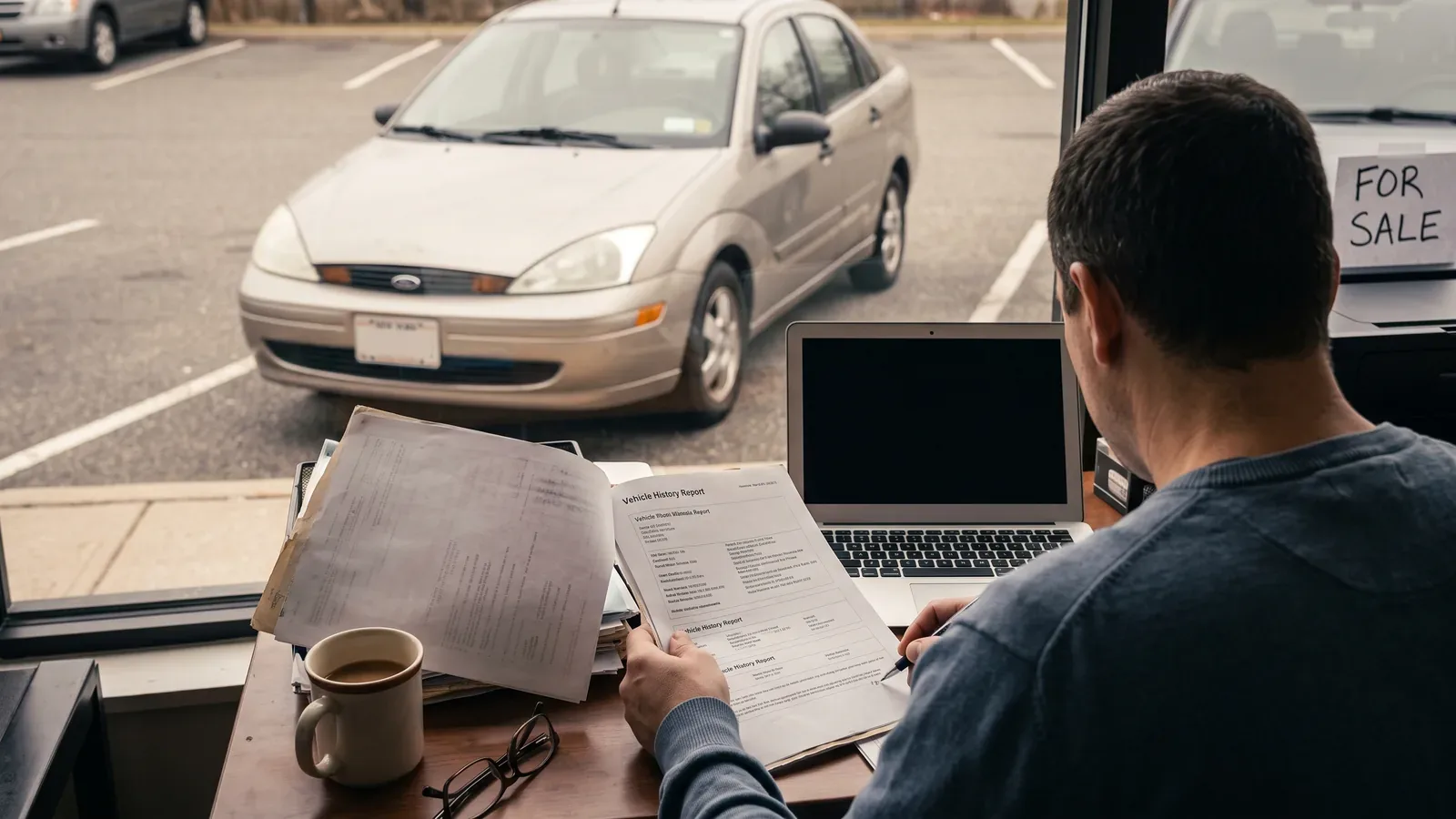
AR Motorsports has sold used cars since October 2018 and holds an A+ rating from the BBB. Every car in the indoor showroom comes with a free history report. That matters to local commuters and to parents of new drivers alike. You can review the service history and ownership records before you decide to buy.
These records matter. CARFAX puts the average value loss on a vehicle flagged for odometer rollback at about $3,300. CARFAX reports these rollbacks are rising about 7% a year. A careful history review helps you steer clear of them. Whether you search for cars under $5,000 or models closer to $10,000, checking the paperwork remains your first line of defense.
Key Takeaways
1. Check the history details: A history report summarizes past accidents, title status, and key service records.
2. Look for title brands: Pay close attention to labels like salvage, lemon, or flood on the title.
3. Verify service patterns: Use service records and reported mileage to track consistent care for the car.
4. Identify common red flags: Watch for title brands, reported accidents and gaps in the service record.
5. Plan for an inspection: History reports cannot detect unreported damage or current mechanical failures.
What Is in a CARFAX Report Summary?
The CARFAX report summary sits at the top of the document to give an instant overview of a car's history. This summary box carries the last recorded odometer reading and the number of previous owners. It also confirms whether that specific car qualifies for the CARFAX Buyback Guarantee. This program helps protect you if a dealer fails to report certain title issues that are later found on the car.
The report uses a green checkmark to indicate no reported incidents. This visual aid makes it simple to see if a car has a clean history. If the record is clear, the report will show no reported accidents or frame damage in that section. You can check the history of any car in our used car inventory to verify these details yourself. Every listing has this history report so you can feel informed.
How Do You Check Ownership and Title History?
You check ownership and title history by obtaining a full vehicle history report. It reveals how many people have owned the car and how long each kept it. It also gives the registration history and the estimated annual mileage. The report also shows whether the car was in personal or fleet use. You must look closely for a branded title, such as salvage, lemon, or flood damage. These marks indicate severe past issues that impact safety and value.
Every used car on a dealer lot must display a Buyers Guide, according to the FTC (2026).
Where Do You Find Accident and Damage History?
You find accident and damage history by checking official CARFAX vehicle history reports for any car you are considering. These reports detail incidents ranging from minor cosmetic scrapes to major collisions. Each entry gives the date, location, and the recorded damage severity. You should look for the accident indicator, which flags whether a police report was filed after a crash.
Pay close attention to any mention of airbag deployment within the history report. This event often signals a significant impact that exceeds standard fender bender damage. You should also check for notes about structural damage. This can affect how a car handles and its long-term safety. If a report shows these events, it is wise to ask for a pre-buy inspection before moving forward. You can review the history of any car in the used car inventory online. That helps you decide which model suits your needs.
How Do You Verify Service and Mileage Records?
Compare the last reported mileage in the report to the current reading on the dashboard. That is how you verify service and mileage records. These records show oil changes, tire rotations and major repairs reported by shops to CARFAX. When maintenance records show a clear timeline, it suggests the previous owner kept up with routine care. Look for steady increases in mileage between each service entry.
A sudden drop or a long period with no new mileage entries is a major red flag for odometer rollback. This practice is illegal, and it involves lowering the displayed miles to inflate the value of a car. You should also check that the service history dates and the mileage logged at those times agree. Say a car shows 100,000 miles one year and 50,000 two years later. The odometer may have been altered. Always verify these details in the used car inventory before you buy.
You can see a free CARFAX on every car. Check the owner count and title status of anything on your list. This helps you compare other models. Verify the history before you head out to schedule a test drive.
What Are the Biggest Red Flags to Look For?
Three things matter most on a vehicle history report: a branded title, an odometer discrepancy, and major accident or structural damage. A branded title is a permanent label that alerts buyers to serious past events. A total loss from flood, fire or severe collision is the usual cause. These cars often carry hidden risks that impact safety and insurance eligibility.
An odometer discrepancy is another critical warning that suggests the mileage shown on the dashboard may not be accurate. The ownership record is worth reading alongside the service history. How the car was looked after tells you far more than how many people owned it. Other red flags include large gaps in service history or a history of a failed emissions test. These issues warrant further investigation into the car's true state before you commit to a buy. A qualifying used car carries a free written dealer warranty, according to the New York Attorney General (2026).
What Does CARFAX Not Tell You?
A CARFAX report only shows events that were documented and shared by police, insurance firms, or repair shops. This means the report is not foolproof. It lacks data on accidents and repairs that never went through an official claim. Private party sales are especially prone to these information gaps. Individual sellers may not keep records or choose to disclose past damage.
The report also cannot tell you the current state of a car or the quality of any previous fixes. A car might have a clean history but still require significant engine or transmission work to be safe on the road. History reports do not show real-time wear and tear. A pre-buy inspection remains the best way to find hidden issues before you decide. AR Motorsports has a free CARFAX with every car.
Open safety recalls are free to check by VIN, according to NHTSA (2026).
Frequently Asked Questions
What are the red flags on a CARFAX report?
Common red flags include title brands such as salvage or rebuilt, which mean an insurer once declared the car a total loss. Watch for odometer discrepancies too, where a later reading is lower than an earlier one, since that suggests tampering. Read the service record rather than counting owners, because condition is what decides whether a car is worth buying. Failed emissions entries and long gaps in the service record are worth questioning before you make an offer.
What is considered a dirty CARFAX?
A dirty report contains negative records such as accident history, frame damage or structural repair. It may also carry a flood damage marker, which often leads to long-term electrical failure. A deployed airbag or a total loss entry falls into the same category. Most buyers treat any of these as a dirty history, though the severity varies considerably. A minor reported bump is not the same as a rebuilt title, so read the detail rather than the label.
What does the green check mean on CARFAX?
The green check confirms that no severe title issues or major accidents were reported to the database for that exact car. It indicates a clean title with no record of structural damage or total loss events. The mark is a quick way to filter out cars carrying documented, high-impact incidents. It is not a guarantee of state, because it only reflects what was actually reported. An unreported accident leaves no trace and still earns the check.
How accurate is a CARFAX report?
Accuracy depends on whether shops, insurance companies and police departments submitted their data to the network. The system captures millions of records, but it cannot document an event that never passed through official channels. Repairs paid for in cash are the clearest example, since they generate no paperwork at all. Treat the report as a supplement to a hands-on mechanical inspection rather than a replacement for one. The two together give a fuller picture than either alone.
Is a one-owner car with no accidents always a good buy?
A single owner is a positive signal, but it does not guarantee the car received proper service. Some owners skip essential services such as oil changes or transmission fluid flushes, which leads to premature wear. Others cover very low annual mileage, leaving seals and tires to age without being used. Verify that the service records show consistent care regardless of how many people drove the car before you. The paperwork matters more than the owner count.
Can I get a CARFAX report for free?
You do not need to pay for a report if you shop with dealers who include one with their inventory. Many retailers give these documents at no extra cost as a transparency measure. Checking the inventory pages on a dealer website is usually the most effective way to access them without paying. A private seller may also have already bought a report and can forward it to you on request.
What is the difference between CARFAX and AutoCheck?
Both services track vehicle history, but they collect data from different sets of partners. CARFAX holds a very large database of service records drawn from repair shops and dealerships. AutoCheck leans more heavily on auction and salvage data, and adds a proprietary score ranking predicted reliability. Comparing both reports gives a broader view when you have access to each. Where the two disagree, the discrepancy is worth investigating rather than averaging out.
What does a 'branded title' mean on a CARFAX report?
A branded title is a permanent legal notice on the car record. It marks a flood, fire or accident that ended in an insurance total loss. These titles warn buyers that the car may have hidden safety risks or be difficult to insure in the future. Once a title is branded, it stays with the car for its entire life regardless of who buys it.
Do I still need a pre-buy inspection if the CARFAX is clean?
A clean history report does not mean the car is free from current mechanical or safety issues. A qualified mechanic will find oil leaks, worn suspension parts and failing transmission components that no report can track. The inspection also catches problems that developed after the last reported service visit. Treat it as the final step before committing, so your budget goes toward a solid daily driver. The cost is small next to the repairs it helps you avoid.
What is the CARFAX Buyback Guarantee?
The program covers a major title problem the original report missed. A salvage or flood brand is the usual example. Suppose a buyer purchases a car with a qualifying clean report. If an undisclosed title issue later comes to light, the provider may buy the car back under specific terms. Check the report summary to confirm whether a listing qualifies for this coverage. Do that before you commit.
Executive Summary
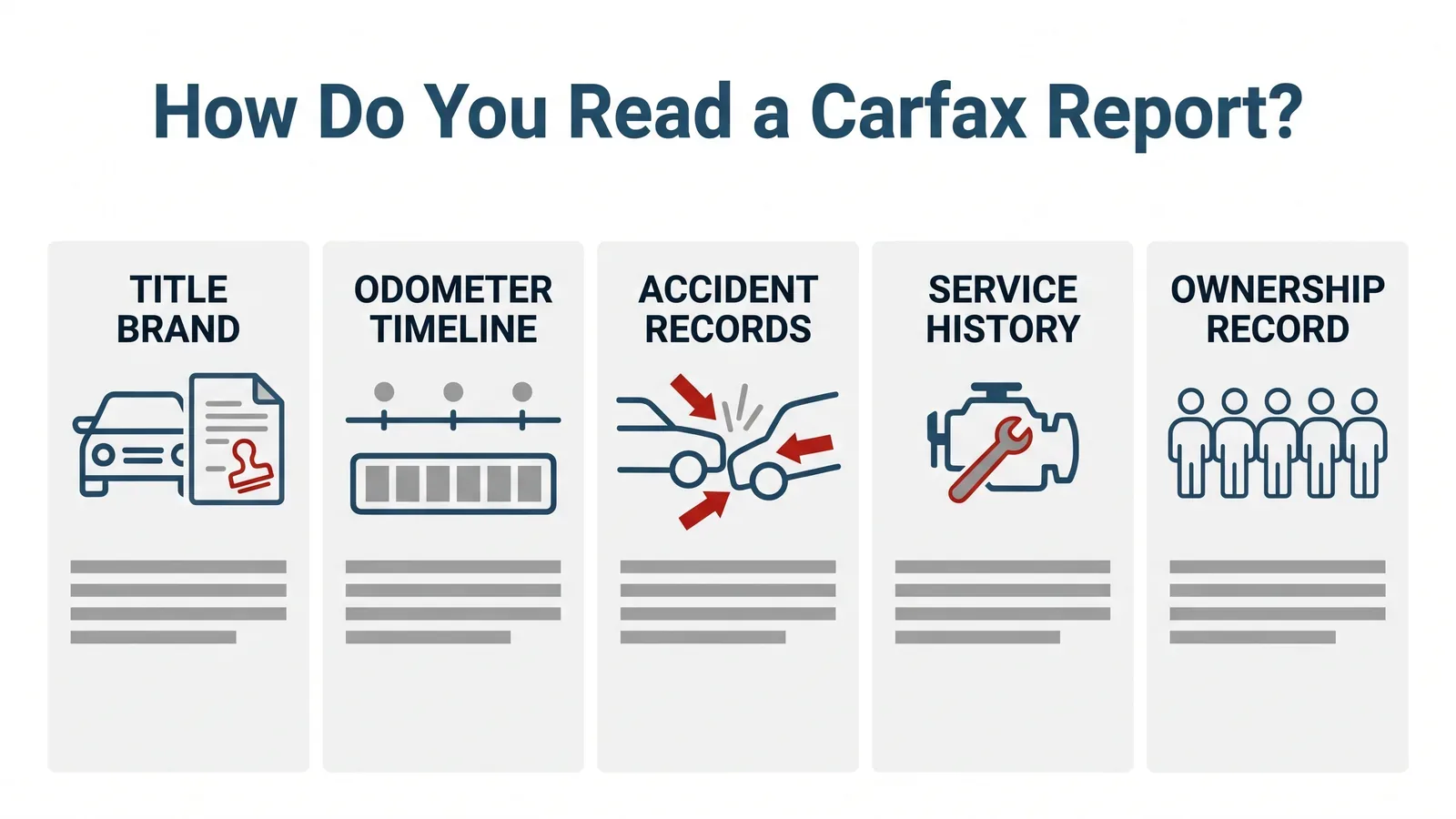
A CARFAX report is read in five passes: title brand, odometer timeline, accident and damage records, service history, and owner count. Title brands matter most. Salvage, flood and lemon designations follow a car permanently and affect both safety and insurance. Odometer entries should rise steadily. A reading that falls or stalls is the clearest sign of tampering. Service gaps of several years are worth asking about. What the report cannot show is unreported damage, current state, or work paid for in cash. That is why a clean report still calls for an independent inspection.
What Should You Do Next?
Every car at AR Motorsports comes with a free CARFAX report. You can read the full history before you commit. You can schedule a test drive and go through the report together. Browse used cars under $5,000 in Suffolk County, or see what to expect from a used car dealer in Suffolk County.
People Also Read
• How Do You Detect Odometer Fraud?
• KBB vs NADA: Which Used Car Value Is Accurate?
About the Author
Angelo writes for the AR Motorsports team in Bay Shore, New York. The indoor showroom at AR Motorsports has served Suffolk and Nassau County since October 2018. Every vehicle comes with a free CARFAX report, so buyers read the history before they commit. AR Motorsports has held a BBB A+ rating since August 2023. The team works with buyers across every credit profile.
Expertise: Used Vehicle Sales, Vehicle History Reporting, Auto Financing, Trade-In and Vehicle Appraisal, Long Island Used Car Market
Connect: Facebook
Disclaimer: This article is for general information only and is not financial, legal, or tax advice. Vehicle availability, pricing, and terms change without notice. Financing is arranged through third-party lenders and is subject to credit approval, and not all applicants qualify. Vehicle history information comes from third-party reports, including CARFAX, and AR Motorsports does not guarantee that any report is complete. Confirm current details with AR Motorsports before making a purchase decision.