


Last Updated: November 2026
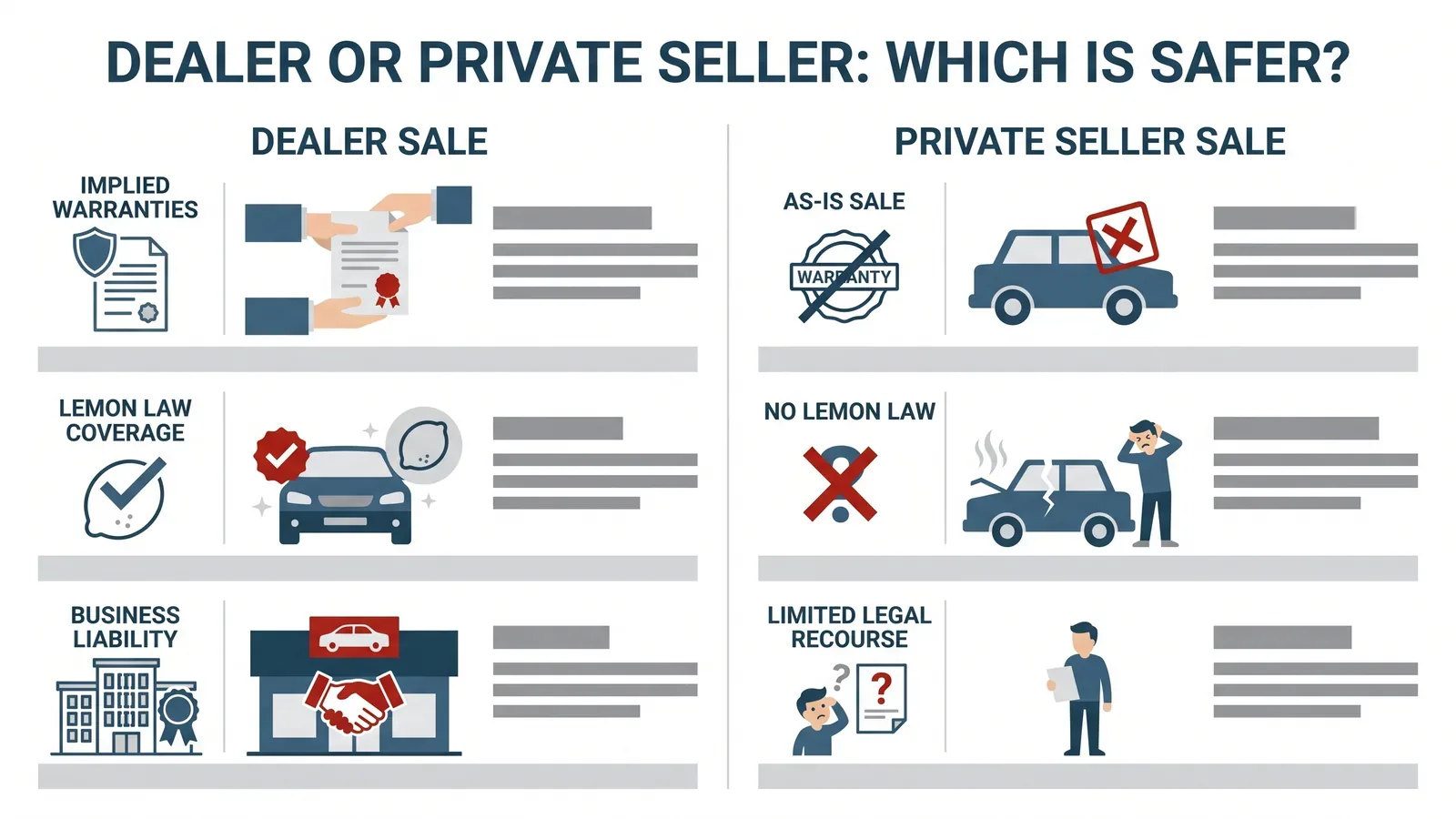
A private-seller purchase is a sale made directly with the owner, without the dealership protections New York law attaches to a retail sale. When you avoid a retail dealer, you lose access to state-mandated protections like the NY Used Car Lemon Law. Private transactions also lack the oversight found at established locations, making it harder to verify the car history before you pay.
One major danger in private sales involves hidden issues with the car odometer. CARFAX reports that vehicles flagged for possible odometer rollback lose an average of about $3,300 in value. When an owner misrepresents the miles driven, you end up paying for a car that has much more wear than the dashboard displays. This financial loss is common when sellers attempt to inflate the worth of an aging sedan or truck.
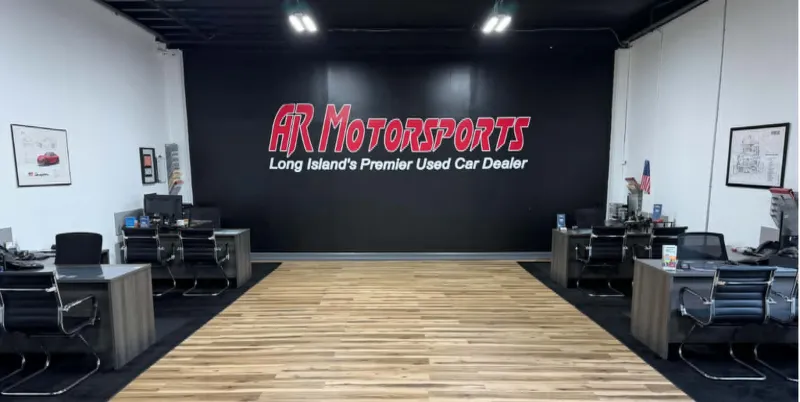
AR Motorsports provides a different path for shoppers in Suffolk and Nassau County. The team has sold used cars since October 2018 and has held an A+ rating from the BBB since August 14, 2023. By choosing an experienced dealer, you gain access to a free CARFAX report on every vehicle to ensure the mileage is accurate. You also get the security of available warranty coverage, ranging from 3 months or 4,500 miles, with longer terms available. Reviewing these verified records helps you avoid the risks of buying a car from an unknown individual.
Key Takeaways
1. Understand your legal rights: Private sales are as-is and fall outside the New York Used Car Lemon Law. Other remedies, such as those for fraud or misrepresentation, can still apply.
2. Prioritize professional inspections: Always hire a trusted mechanic to perform a pre-purchase inspection before buying from any private seller.
3. Check essential ownership paperwork: New York requires a signed title, a completed Bill of Sale and an Odometer Disclosure form.
4. Consider your financing options: Dealerships connect with networks of lenders to support all credit types during a car purchase.
5. Verify the car history: Reputable dealers offer free CARFAX reports for every car in their inventory.
What are the risks of a private car sale?
Private sales carry significant risks because the sale is almost always an as-is sale. This means you accept the car in its current condition with all faults. The seller has no legal duty to provide a warranty or fix issues after you pay.
You also face the threat of fraud, such as title washing. A seller hides a car's true history by moving it between states. Another danger is an undisclosed lien, which can result in the bank seizing your car to pay the seller's old debt. Criminals may also use odometer fraud to mask the true mileage of a high-use vehicle.
How do you inspect a car from a private seller?
You inspect a car from a private seller by checking the condition, fluid levels, and frame for rust. You must insist on a cold start because starting a warm engine hides leaks and startup noises. Listen closely to the motor as it fires up for the first time that day. Uneven tire wear points to bad alignment or worn suspension parts.
Before you hand over any money, arrange for a pre-purchase inspection (PPI) with a local independent mechanic. This person looks for hidden issues that you might miss. This check is your primary defense against buying a broken car. If the seller refuses to let an independent mechanic look at the car, walk away. AR Motorsports includes a free CARFAX report with every vehicle in its indoor showroom. You can read the history before you schedule a test drive.
Open safety recalls are free to check by VIN, according to NHTSA (2026).
What paperwork do you need in New York?
To transfer a car in New York, you must bring specific documents to your local NY DMV office. You need a properly signed-over title from the seller to prove you are the new owner. Private sellers must provide a completed Bill of Sale (MV-912) to verify the sale details.
The buyer is responsible for taking these items to the office to register the car. You must also pay sales tax on the purchase price of the car at this time. Failing to get the title transferred correctly can cause major legal or registration headaches later. Always verify that the name on the title matches the name of the person selling you the car. For buyers who need help choosing a reliable vehicle to register, you can schedule a test drive at our indoor showroom.
Missing forms, state registrations and title transfers all add confusion. You can skip the paperwork hassle by working with our team. Registration and title are applied for on form MV-82, according to the New York DMV (2026).
How do dealer protections differ from private sales?
Licensed NY dealers provide essential protections that private sales lack, including specific coverage under the NY Used Car Lemon Law. When you buy from a dealer, you gain the benefit of an implied warranty of merchantability, which ensures the car is fit for normal driving. This legal safety net does not exist in a private sale.
Reputable dealers add value by providing a free CARFAX report with every vehicle to maintain total transparency. These sellers also handle the registration paperwork at the NY DMV for you. Many also offer extended warranties from 3 months or 4,500 miles, with longer terms available. These services create a secure path for first-time buyers and families alike. The written warranty requirement covers dealer sales only, according to the New York Attorney General (2026).
Can I get a loan for a private party car?
Securing a loan for a private party auto purchase is often difficult because banks struggle to verify the condition of the car. Most lenders shy away from these deals when they cannot inspect the car or confirm its value through a professional appraisal. This is a common barrier for buyers with damaged credit who need a reliable vehicle for their daily commute.
In contrast, dealer-arranged financing is built for these situations. Dealers work with third-party lenders that focus on a wide range of credit histories. These lenders accept cars that are part of a dealer inventory and make the process much more direct. You can look at Financing and Pre-Approval to know how these options function.
How do you handle payment with a private seller?
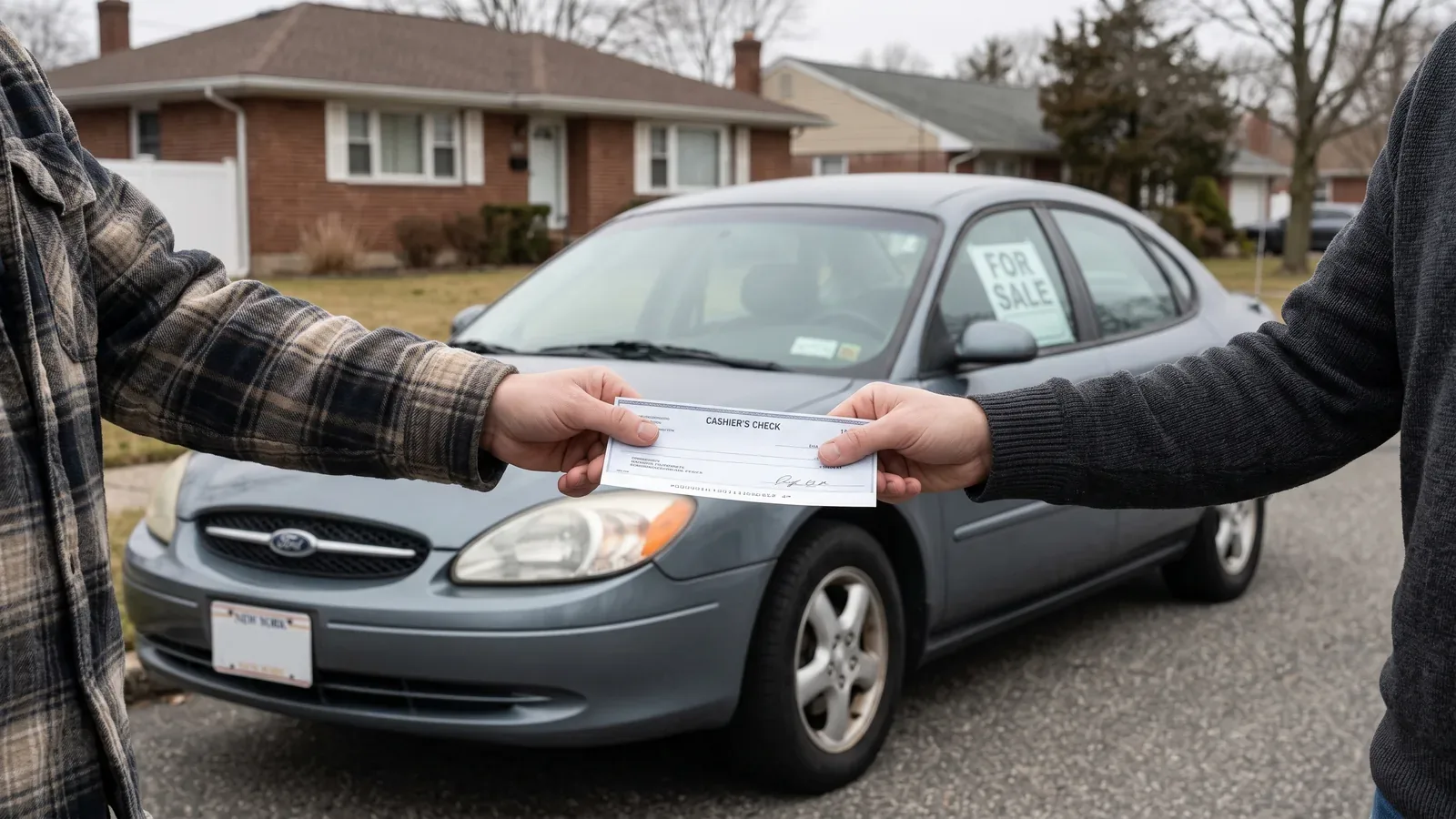
The most secure way to handle payment with a private seller is to use a cashier's check from your bank. This method creates a clear, traceable record of the sale for both parties. Never carry large amounts of cash to pay for a car. Cash is impossible to track. It creates an unnecessary security risk for you during the meeting.
You should always arrange to meet at a bank to complete the deal. Meet at your own bank or the seller's branch. Either gives a secure, public location for signing the title and the bill of sale. Meeting in a bank lobby allows the teller to verify the funds right away. The seller sees that the check is real. You get peace of mind knowing the payment is handled properly. Once the check is handed over, the title transfer is final. If you prefer a structured buying process, you can schedule a test drive at our indoor showroom to look at the current inventory.
Frequently Asked Questions
What are the risks of buying a car from a private seller?
You face significant risks because these sales occur on an as-is basis with no dealer warranty. You may buy a car carrying an undisclosed lien, or one with a salvage title that was never mentioned. A seller who misrepresents the condition leaves you with limited practical recourse once the money has changed hands. Verification before payment replaces the protections a dealer sale would have given you. AR Motorsports sells from an indoor showroom in Bay Shore.
How do you drive a car you just bought from a private seller?
You cannot legally drive a car home from a private seller until it is registered in your name. Driving without current registration and insurance is illegal and can lead to the car being impounded. Secure your insurance policy before you go to the DMV to register the car. Some buyers arrange to collect the car after registration for exactly this reason.
Do I have to pay sales tax on a used car from a private seller in NY?
Yes. You pay state and local sales tax on the purchase price of the car when you register it. If the price looks greatly below fair market value, the tax office may require an appraisal to decide the amount due. Provide a bill of sale signed by both parties at registration. Private sales carry no trade-in credit, so tax is calculated on the full price.
Can I get a temporary tag for a private car sale in New York?
New York does not issue temporary tags for private transactions. You must register the car in your name and receive permanent plates before driving it on public roads. The process requires a valid title transfer and proof of insurance. Without both, you have no legal way to operate the car once the keys change hands. Plan collection around registration rather than the handover.
What is a curbstoner and how can I spot one?
A curbstoner is a seller who poses as a private individual but actually sells cars as an unlicensed business. They often park cars in residential areas or parking lots to avoid dealer regulations. You can spot them by checking if the name on the title matches the name of the person selling the car. If the seller has multiple cars for sale or keeps referring you to a different owner, they are likely a curbstoner.
Is it better to pay cash or cashier's check to a private seller?
A cashier's check is safer for you than carrying a large amount of cash. It provides a record of the sale and keeps you from having to travel with significant funds. Always meet in a safe, public location to exchange the check for the signed title and keys. Ask for a photo of the seller's identification to confirm it matches the name on the title.
Does the NY Lemon Law apply to private car sales?
No. The used car lemon law applies to dealer sales, so private sellers have no obligation to provide a warranty or fix defects. Once you hand over payment the car is yours, including any mechanical problems it turns out to have. That lack of recourse is why an independent pre-purchase inspection matters more in a private sale than in any other kind of sale.
How much are title and registration fees for a private sale in NY?
Registration fees in New York vary with the weight of the car and the length of your registration period. You also pay separate fees for the title and for transferring plates. Budget extra funds for these costs, because they sit outside the purchase price agreed with the seller. Sales tax is collected at the same time, which makes the total at the counter higher than expected.
What should I do if the seller doesn't have the title?
Never buy a car when the seller cannot produce a valid, signed title. Without it you cannot prove legal ownership or register the car in your name. A missing title sometimes means an outstanding loan, and sometimes means the seller is not the owner at all. Walking away is the only safe choice. A promise to send it on later is not a substitute.
How do I get insurance for a car I just bought privately?
Get quotes for the specific vehicle using its VIN before you finalize the purchase, since rates vary more than buyers expect. Contact your insurance agent once you have the seller's details and the car details. You need proof of insurance to complete the registration, so the policy has to be active first. Arranging it in advance means you are covered the moment the title transfers.
Executive Summary
A private sale carries no dealer warranty and no lemon law protection. Verification does the work the law would otherwise do. Confirm the seller's identity matches the name on the title. Check the title for brands before discussing price. Arrange an independent inspection. Use a traceable payment method rather than cash. Complete the transfer paperwork at the point of sale rather than trusting a promise to send it on. The lower price of a private sale pays for the risk and effort you take on. It is not a discount.
What Should You Do Next?
AR Motorsports sells from an indoor showroom in Bay Shore, with a free CARFAX report on every vehicle. You can schedule a test drive and review that history before any money changes hands. Browse used cars under $10,000 in Nassau, or see what to expect from a used car dealer in Suffolk County.
People Also Read
• Curbstoning: Spot Fake Private Sellers
• What Is the Long Island Used Car Market Like in 2026?
About the Author
Angelo writes for the AR Motorsports team in Bay Shore, New York. The indoor showroom at AR Motorsports has served Suffolk and Nassau County since October 2018. Every vehicle comes with a free CARFAX report, so buyers read the history before they commit. AR Motorsports has held a BBB A+ rating since August 2023. The team works with buyers across every credit profile.
Expertise: Used Vehicle Sales, Vehicle History Reporting, Auto Financing, Trade-In and Vehicle Appraisal, Long Island Used Car Market
Connect: Facebook
Disclaimer: This article is for general information only and is not financial, legal, or tax advice. Vehicle availability, pricing, and terms change without notice. Financing is arranged through third-party lenders and is subject to credit approval, and not all applicants qualify. Vehicle history information comes from third-party reports, including CARFAX, and AR Motorsports does not guarantee that any report is complete. Confirm current details with AR Motorsports before making a purchase decision.