


Last Updated: November 2026
Used car consumer protections are a set of legal safeguards led by the New York Used Car Lemon Law. They govern how dealers disclose history, offer warranties and conduct sales. These regulations help protect you when buying a car in Nassau or Suffolk County. Because some sellers hide past damage or mechanical issues, knowing your rights is critical before you sign any paperwork. Vehicles flagged for possible odometer rollback lose an average of about $3,300 in value, according to CARFAX. A vehicle history report is how you catch it.
AR Motorsports has sold used cars since October 2018 and has held an A+ rating from the Better Business Bureau since August 14, 2023. Unlike private sellers, professional dealerships are required to give specific disclosures about the condition of the car. When you shop for a budget vehicle, you should always look for a dealer that gives an open history report. This allows you to verify the title status and owner count before you make a commitment.
Finding a solid car under $10,000 or even under $5,000 on Long Island takes research. Check both the condition and the legal status of the car. You should verify that the dealer offers a written warranty. These can range from 3 months / 4,500 miles, with longer terms available depending on the exact vehicle and coverage plan. Understanding these protections helps you avoid common pitfalls. Before you visit a lot, check the title history to ensure you are not buying a car with a hidden past. Always inspect the car in person and compare the odometer reading against the history report provided.
Key Takeaways
1. Understand Lemon Law protections: New York state law gives a warranty based on time and mileage for most used cars.
2. Check the Buyers Guide: The federal FTC requires dealers to post a Buyers Guide in every vehicle.
3. Review dealer fees: New York law limits dealer documentation fees to $175.
4. Verify the car history: Always look at a history report like CARFAX to spot title issues or accidents.
5. Get all promises in writing: Verbal deals are very hard to enforce if a problem happens later.
What is the NY Used Car Lemon Law?
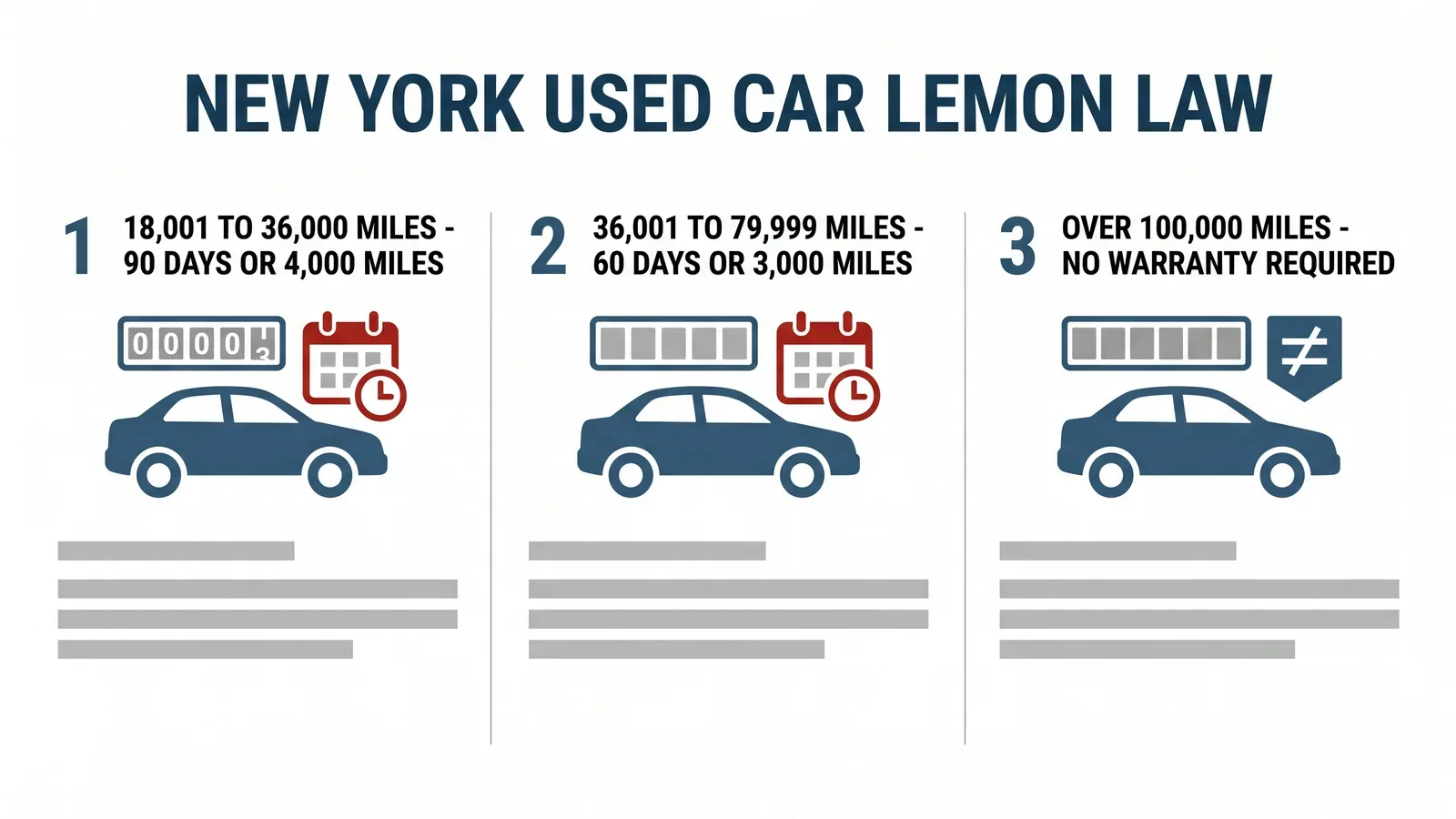
The NY Used Car Lemon Law gives a statutory warranty for used cars sold by dealers in New York State. The law requires dealers to give a written warranty against covered defects. The period depends on the mileage recorded at the time of sale.
If a car has more than 18,000 miles but less than 36,001 miles, the warranty lasts for 90 days or 4,000 miles. For cars with between 36,001 and 79,999 miles, the coverage period is 60 days or 3,000 miles. A covered defect is any problem that occurs during the warranty period which greatly impairs the use, value, or safety of the car. According to the NY Attorney General, this law ensures buyers have protection against major mechanical failures shortly after the sale. If you want to see the inventory, you can schedule a test drive. A qualifying used car carries a free written dealer warranty, according to the New York Attorney General (2026).
What must dealers disclose before a sale?
Dealers must display a Buyers Guide in every used vehicle before they offer it for sale. This requirement comes from the FTC's Used Car Rule. The guide serves as a window sticker that gives critical facts about the car.
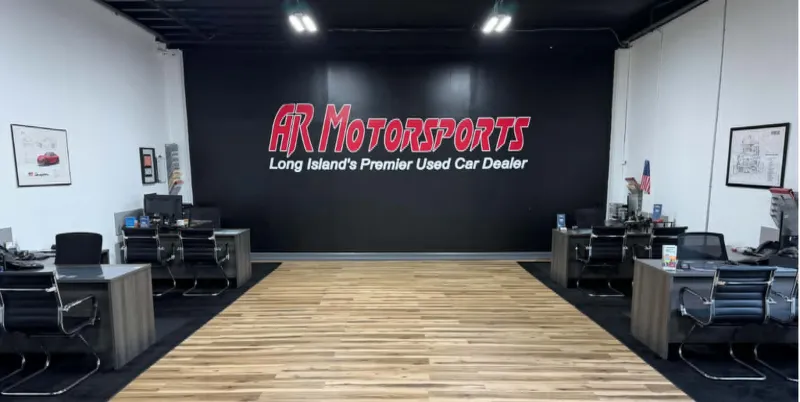
If the dealer marks the car as sold as is, they offer no warranty. You pay for all repairs once you drive away. If a warranty is included, the guide lists the systems covered by the plan. It also states the exact percentage of repair costs the dealer will pay for those parts. Reviewing this form helps you know your likely financial risk before you commit to the sale. You can schedule a test drive to inspect these documents in person at our indoor showroom.
Every used car on a dealer lot must display a Buyers Guide, according to the FTC (2026).
Are dealer documentation fees regulated in NY?
New York State law regulates the car documentation fee that a licensed dealer can charge a buyer. The NY DMV sets a statutory cap on this amount to prevent dealers from adding excessive, arbitrary costs to your deal.
This fee covers the costs a dealer incurs while preparing the paperwork to transfer a title. It is distinct from other state rules like sales taxes and registration fees. Taxes and registration fees are paid directly to the government and are not part of the dealer's profit. You should always review your final paperwork to ensure the total costs match these legal rules. If you have questions about how these costs work, you can schedule a test drive and speak with the team. The documentation fee is capped by regulation, according to 15 NYCRR 78.19 (2026).
Does a free CARFAX report protect me?
A free CARFAX report does not fully protect you. It serves as a critical tool for revealing a vehicle history. It shows you reported accidents, owner counts, service records, and current title status. These details help you spot red flags like odometer rollbacks or salvage titles before you invest your money. According to CARFAX, odometer rollbacks are rising about 7 percent year over year.
But no report is a full guarantee of a car's state. A history report cannot see recent damage that has not been filed yet. You should always use this data alongside a professional pre-purchase inspection (PPI). A mechanic can identify hidden issues that do not appear on any records. You can check the history and browse current used car inventory to see what details are on hand for each vehicle.
If you want to view our current inventory inside our climate-controlled showroom, you can schedule a no-pressure test drive.
What if I have bad credit or no credit?
Having bad or no credit does not prevent you from accessing your right to fair lending practices. Federal law prohibits lenders from discriminating against you based on race, religion, or other personal factors under Consumer Financial Protection Bureau guidelines.
Most dealers work with third-party lenders to find options that fit your budget. Getting pre-approved helps you compare other offers before you visit a lot. This process gives you a clear idea of your buying power before you negotiate. Comparing the annual percentage rate across offers is what shows the true cost. Always review your loan terms closely to ensure they remain transparent. You can learn more about managing your financing at AR Motorsports.
What if the dealer lied about the car?
Material misrepresentation occurs when a dealer gives false details about a car's state to close a sale. This differs from sales puffery, which is subjective opinion such as calling a car solid.
You can pursue a case in small claims court to recover damages if the car was not as described. To protect yourself, always get all promises in writing before you hand over any money. A verbal agreement is very hard to prove in a dispute later. If you find a car that interests you, schedule a test drive.
Frequently Asked Questions
What recourse do I have against a used car dealer?
Start by reviewing your sales contract and the Buyers Guide provided at the time of sale. Those two documents govern what the dealer actually promised you. You may also seek resolution through small claims court for financial damages. Keep copies of every document related to the sale and to any repair attempts. A written record is what makes a complaint actionable rather than a disagreement.
What is New York's Used Car Lemon Law?
The law gives a warranty on cars bought from a dealer with more than 18,000 miles and fewer than 100,000. It covers vital mechanical parts including the engine, transmission, drive axle, brakes and steering. The dealer must fix covered defects, or give a refund if the car cannot be repaired after a reasonable number of attempts. Coverage length shortens as the recorded mileage rises.
Is there a 'cooling-off' period to return a used car in NY?
New York does not grant a cooling-off period for vehicle sales. Once you sign the retail installment contract you are legally bound to the sale. Verify the car's state and secure your financing before signing any paperwork. There is no automatic right to return a car because you changed your mind. The three-day cancellation rule people remember applies to door-to-door sales, not to cars.
What must dealers disclose under the FTC Used Car Rule?
Dealers must display a Buyers Guide in the window of every used car offered for sale. The document states whether the car comes with a warranty or is sold as is. Where a warranty is included, the guide must set out what percentage of parts and labor the dealer will pay. The Buyers Guide becomes part of your sales contract and overrides any contrary verbal promise.
How much can a NY dealer legally charge for a doc fee?
New York caps dealer documentation fees at $175. The fee covers preparing paperwork and filing registrations, and a dealer cannot charge more than that for document processing. It must be disclosed rather than buried in the total. Because the cap is fixed, the doc fee is rarely where the real money sits in a deal. Compare out-the-door totals instead of arguing over this line.
How do I file a complaint against a car dealership in New York?
File with the New York Attorney General's office, providing your sales contract, copies of communications with the dealer, and records of any repair attempts. The office reviews these cases to decide whether the dealer violated state consumer protection laws. You can also contact the DMV consumer services division for issues involving title or registration. Submit written evidence rather than a verbal account.
What does 'as is' mean when buying a used car from a dealer?
Buying a car as is means you accept the car in its current condition. The dealer has no obligation to pay for repairs once the sale completes, and you are responsible for all maintenance and mechanical costs. Read the Buyers Guide carefully to confirm whether the as-is box is checked before you buy. An as-is sale is only lawful where the car falls outside the state warranty criteria.
Can a dealer in NY sell a car with a salvage title?
A dealer can sell a salvage vehicle, but must disclose the title status to the buyer in writing. That disclosure should appear on the bill of sale and on the transfer documents. Be aware that a salvage title can affect your ability to secure financing or insurance. It also reduces resale value permanently, which matters even if the car drives perfectly well.
What are my rights if a dealer lied about a used car's state?
A dealer who intentionally makes false claims to induce a sale may be liable for fraud or material misrepresentation. Gather all written materials and advertisements supporting your claim, since a verbal account is difficult to act on. Legal action in small claims court may be necessary to recover your losses. Misrepresentation is a separate matter from warranty coverage and applies even to an as-is sale.
Is a vehicle history report a guarantee of a car's state?
A history report is not a guarantee of a car's current condition. It reflects only data reported by police, insurance companies and repair shops. It can reveal past accidents or mileage discrepancies, but it will not show problems that were never reported. Combine the report with a hands-on inspection to get a clear picture of the car. AR Motorsports gives a free CARFAX report with every vehicle.
Executive Summary
A New York dealer owes you certain things. The FTC requires a Buyers Guide in the window of every used car, stating whether it is sold with a warranty or as is. State law requires a free written warranty on cars that cost at least $1,500 and have under 100,000 miles. Coverage shortens as mileage rises. That warranty names components rather than covering the whole vehicle. Above 100,000 miles no warranty is required and an as-is sale is lawful. Misrepresentation is a separate matter from warranty coverage and remains actionable either way.
What Should You Do Next?
Verify the vehicle identification number against the title before you pay for any car. Ask to see the completed Buyers Guide for your selected model to confirm if the car comes with a dealer warranty. You should also check the most recent service records to confirm the seller performed basic maintenance like oil changes and tire rotations.
AR Motorsports has sold used cars since October 2018. Every vehicle has a free CARFAX report, so you can check the history before you buy. To view the current inventory, schedule a test drive. Browse used cars under $10,000 in Suffolk, or see what to expect from a used car dealer in Suffolk County.
People Also Read
• Curbstoning: Spot Fake Private Sellers
• What Is the Long Island Used Car Market Like in 2026?
About the Author
Angelo writes for the AR Motorsports team in Bay Shore, New York. The indoor showroom at AR Motorsports has served Suffolk and Nassau County since October 2018. Every vehicle comes with a free CARFAX report, so buyers read the history before they commit. AR Motorsports has held a BBB A+ rating since August 2023. The team works with buyers across every credit profile.
Expertise: Used Vehicle Sales, Vehicle History Reporting, Auto Financing, Trade-In and Vehicle Appraisal, Long Island Used Car Market
Connect: Facebook
Disclaimer: This article is for general information only and is not financial, legal, or tax advice. Vehicle availability, pricing, and terms change without notice. Financing is arranged through third-party lenders and is subject to credit approval, and not all applicants qualify. Vehicle history information comes from third-party reports, including CARFAX, and AR Motorsports does not guarantee that any report is complete. Confirm current details with AR Motorsports before making a purchase decision.