


Last Updated: November 2026
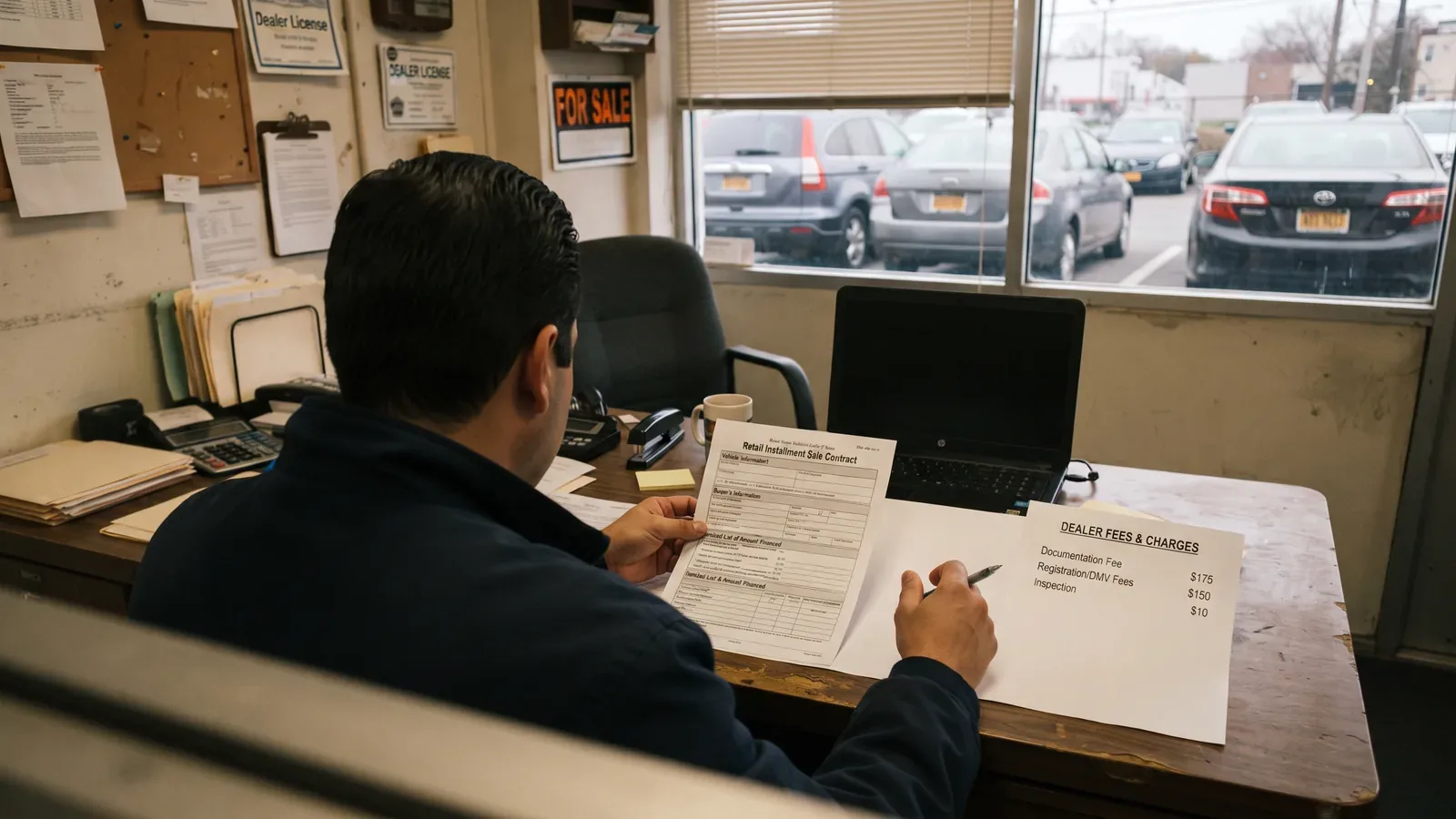
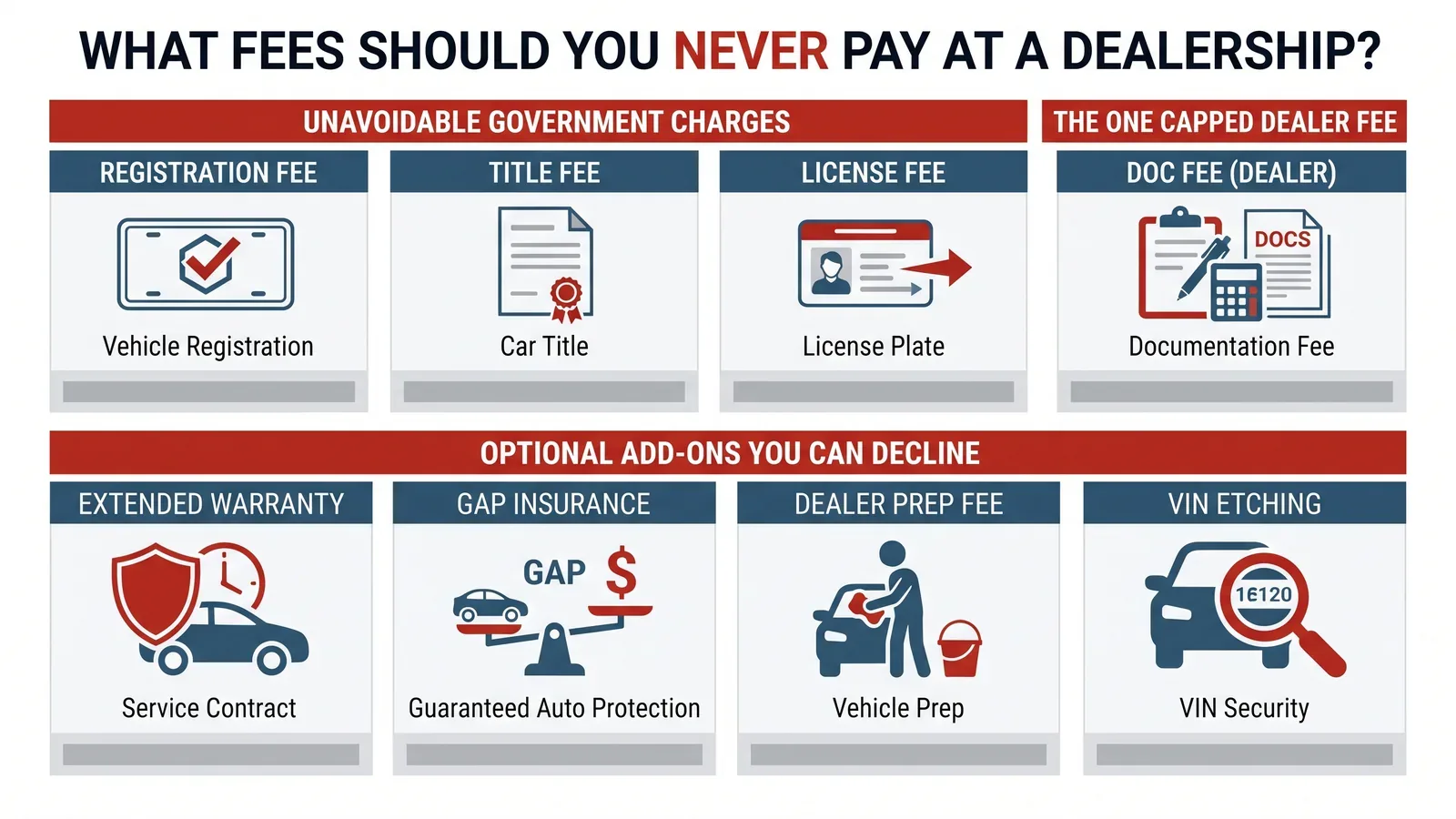
A junk fee is a dealer-added charge with no service behind it, or one priced far above the service it names. New York caps only one dealer charge, the $175 documentation fee, which leaves every other line open. That is why the add-ons at the end of a buyer's order deserve more attention than the fee everyone argues about.
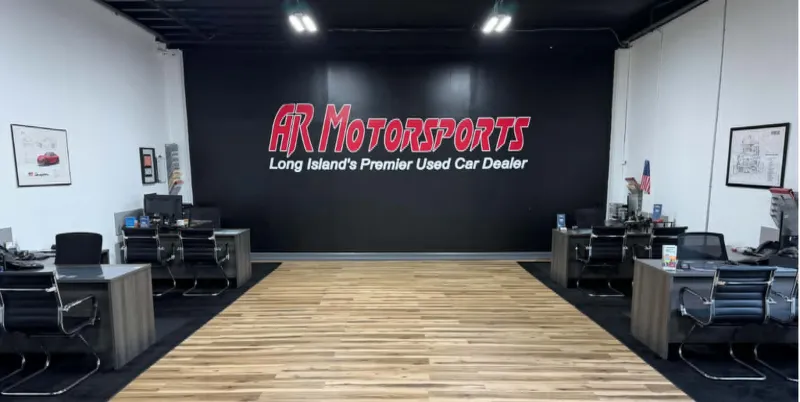
AR Motorsports has sold used cars from an indoor showroom in Bay Shore since October 2018. It stocks cars from under $10,000, where a $600 add-on stack is a real share of the purchase.
This article goes through the common add-ons one at a time, with what each actually is and whether it is taxable.
Key Takeaways
1. Only the doc fee is capped: New York limits it to $175. Every other dealer charge has no legal ceiling.
2. Add-ons are optional, not mandatory: VIN etching, nitrogen and paint protection can all be declined.
3. Dealer prep is taxable: New York includes preparation and advertising charges in the taxable receipt.
4. The doc fee is not taxable: A separately stated, reasonable doc fee sits outside it, as do DMV fees.
5. Ask before the finance office: Add-ons appear late, when refusing feels hardest.
Each item below has a different answer, so take them one at a time.
Which Dealer Fees Are Legitimate?
Two groups are unavoidable, and both are easy to identify. Government charges come first: sales tax, title, registration and the state inspection. The dealer collects these and forwards them, keeping none of it.
The documentation fee is the second, and it is the only regulated dealer charge. According to 15 NYCRR 78.19 (2021), it "may not exceed $175." Everything else is a third group: dealer-set, uncapped, and open to refusal. Sorting an order into those three buckets tells you where the conversation should go.
Should You Pay for VIN Etching?
Generally not, because you are paying a large markup for a small deterrent. VIN etching marks the Vehicle Identification Number onto the glass so a stolen car is harder to resell. The idea is sound and the dealership price rarely is.
It is also entirely optional, and no New York rule requires it. If a dealership presents etching as already done and therefore unavoidable, that is a negotiation position rather than a legal one. Ask for it to be removed, and treat refusal as a data point about the rest of the deal.
Is Nitrogen in the Tires Worth Paying For?
No, at least not as a separate line on a used car. The claim is that nitrogen leaks more slowly than air and keeps pressure stable. Ordinary air is already about 78% nitrogen, so the marginal benefit is small for normal driving.
Checking your pressure monthly achieves more than the fill does, and it is free. If a nitrogen charge appears on an order, ask for it to come off. Nothing about the car changes if it does.
What Is a Dealer Prep Fee For?
Officially, readying the car for delivery: cleaning, fluids, a safety check. In practice the charge is uncapped and varies widely. On a used car much of that work overlaps with reconditioning the dealership would do anyway.
This is also where the tax point bites. According to New York Publication 838 (2012), the taxable receipt includes "dealer preparation fees." It includes "advertising charges" too. The same publication excludes a separately stated, reasonable doc fee. So a dealer moving cost into an uncapped, taxed prep line raises two things at once: your total and your tax.
| Charge | What it is | Capped? | Taxable in NY? |
|---|---|---|---|
| Documentation fee | Registration and title paperwork | $175 | No, if separately stated |
| Title, registration, inspection | Government charges | Set by state | No, if actual amount stated |
| Dealer preparation | Cleaning and delivery readiness | No | Yes |
| Advertising charge | The dealer's own marketing | No | Yes |
| VIN etching | Optional theft deterrent | No | Optional, decline it |
| Nitrogen tire fill | Optional tire service | No | Optional, decline it |
The two right-hand columns together explain why a lower doc fee is not automatically a better deal.
Ask for the itemized order before you visit. AR Motorsports lists its Suffolk County inventory and its Nassau County listings with pricing shown.
Should You Buy GAP Insurance From the Dealer?
Only after comparing it elsewhere. The product is real, but the dealership is rarely the lowest-priced source. GAP covers the difference between what you owe and what the car is worth if it is written off. That gap matters most on a long loan with little money down.
There is a New York detail worth knowing. Publication 838 excludes a GAP charge from the taxable receipt where it is "reasonable and separately stated." So ask for it on its own line. Bundled into another charge, it may attract tax you would not otherwise owe.
How Do You Get an Unwanted Fee Removed?
Ask before the finance office, not in it. Request an itemized buyer's order by email while you are still deciding, then mark every line you do not recognize. Add-ons appear late in the process precisely because refusing feels hardest once you have committed emotionally.
When you do ask, be specific about the line and the amount rather than complaining about fees generally. A dealership that will remove an add-on does it quickly. One that insists an optional item is mandatory has told you something useful. Every AR Motorsports listing shows the owner count and vehicle history status before you ask.
Frequently Asked Questions
What fees should you never pay at a dealership?
The optional add-ons are the ones to refuse: VIN etching, nitrogen tire fills, paint or fabric protection, and vaguely named appearance packages. None is required by New York law and each is dealer-set with no cap. You should also question any line you cannot match to a service. What you cannot refuse is sales tax, title, registration and the state inspection fee, because those are government charges.
Can a dealer make you pay for add-ons already installed?
They can present it that way, but installation does not create an obligation on your part. If etching or a protectant has already been applied to a car on the lot, that was the dealership's decision before you arrived. Ask for the charge to be removed from the order. Some sellers will, some will not, and the answer tells you how the rest of the negotiation will run.
Is a dealer prep fee legal in New York?
Yes, and it is also uncapped, which is the problem. Only the documentation fee carries a legal ceiling in New York, currently $175. Preparation and reconditioning charges have no limit and vary by more than a thousand dollars between dealerships on comparable cars. They are legal, negotiable, and part of the taxable receipt under Publication 838, so they cost more than their face value.
Which dealer fees are taxable in New York?
Publication 838 includes dealer preparation fees and advertising charges in the taxable receipt, along with the vehicle price, warranty fees and dealer-installed equipment. It excludes a separately stated, reasonable documentation fee, DMV registration, title and inspection fees, and a reasonable separately stated GAP insurance charge. That split is worth knowing, because it means where a dealer puts a charge changes how much tax you pay.
Should I refuse an extended warranty at the dealership?
Not automatically, though never buy one under time pressure. On a higher-mileage car the coverage can genuinely be worth having. According to the New York Attorney General (2026), the Used Car Lemon Law only covers cars driven fewer than 100,000 miles at purchase. Above that, a written warranty is the only coverage you have. Ask what components are covered, what the deductible is, and who administers the contract.
What is a market adjustment on a used car?
It is a dealer-added premium with no service behind it, and on a used vehicle it has no obvious basis at all. The charge became common on new cars during supply shortages. On used stock the asking price already reflects what the market will bear. An adjustment on top is just a higher price with a label. Treat it as fully negotiable.
How do I know if a fee is real or invented?
Match each line to one of three groups: a government charge, the capped documentation fee, or a dealer-set item. Government amounts should match published state rates. The doc fee should be at or under $175. Anything in the third group is negotiable whatever it is named. A line you cannot categorize, or that a salesperson cannot explain in plain terms, has not been justified.
Do fees differ between Suffolk and Nassau County?
The regulated charges do not, because the documentation cap and the state fee structure are identical statewide. Sales tax rates do differ between the counties, so the same car produces a different out-the-door total in each. Dealer-set add-ons vary by dealership rather than by geography. Comparing two written out-the-door totals remains the only reliable way to see which offer is actually cheaper, whichever county it sits in.
Can I walk away after signing paperwork?
Usually not, which is exactly why the checking happens first. New York does not give car buyers a general cooling-off right on a completed vehicle purchase. Once the contract is signed and the sale is complete, the terms bind you. That is the argument for requesting an itemized order in advance. Read it somewhere other than the finance office, where the pressure is highest.
What is the single most useful question to ask about fees?
Ask for the out-the-door total in writing, covering the vehicle, tax, every government charge and every dealer line. That single figure makes two offers genuinely comparable, because advertised prices exclude different things at different dealerships. It also creates a written record to point at if the final contract differs from the quote. Any charge that appears after you have that number deserves a direct explanation.
Executive Summary
The charges worth refusing are the optional ones. VIN etching, nitrogen tire fills, paint and fabric protection, and unspecified appearance or market adjustment lines. None is required in New York and none is capped. The only dealer charge New York caps is the $175 documentation fee. Tax treatment is a second reason to check where a charge sits. Publication 838 puts dealer preparation and advertising charges inside the taxable receipt. It excludes a separately stated, reasonable doc fee, DMV charges and separately stated GAP insurance. A dealer shifting cost into prep therefore raises the tax as well as the total.
What Should You Do Next?
First, ask for an itemized buyer's order by email before you visit, and mark any line you cannot match to a service. Second, sort the lines into government charges, the capped doc fee, and dealer-set items, then question everything in that third group. Third, ask for the out-the-door total in writing so two offers become comparable.
AR Motorsports does not charge a documentation fee, and has never required a customer to buy a warranty. You can schedule a test drive and go through the order line by line.
People Also Read
• KBB vs NADA: Which Used Car Value Is Accurate?
About the Author
Angelo writes for the AR Motorsports team in Bay Shore, New York. The indoor showroom at AR Motorsports has served Suffolk and Nassau County since October 2018. Every vehicle comes with a free CARFAX report, so buyers read the history before they commit. AR Motorsports has held a BBB A+ rating since August 2023. The team works with buyers across every credit profile.
Expertise: Used Vehicle Sales, Vehicle History Reporting, Auto Financing, Trade-In and Vehicle Appraisal, Long Island Used Car Market
Connect: Facebook
Disclaimer: This article is for general information only and is not financial, legal, or tax advice. Vehicle availability, pricing, and terms change without notice. Financing is arranged through third-party lenders and is subject to credit approval, and not all applicants qualify. Vehicle history information comes from third-party reports, including CARFAX, and AR Motorsports does not guarantee that any report is complete. Confirm current details with AR Motorsports before making a purchase decision.